Biological Survey of Ironwood Forest National MonumentSawtooth Mountains gallery Photographer: Mark Dimmitt
 |
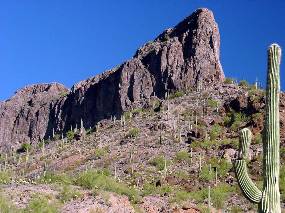 |
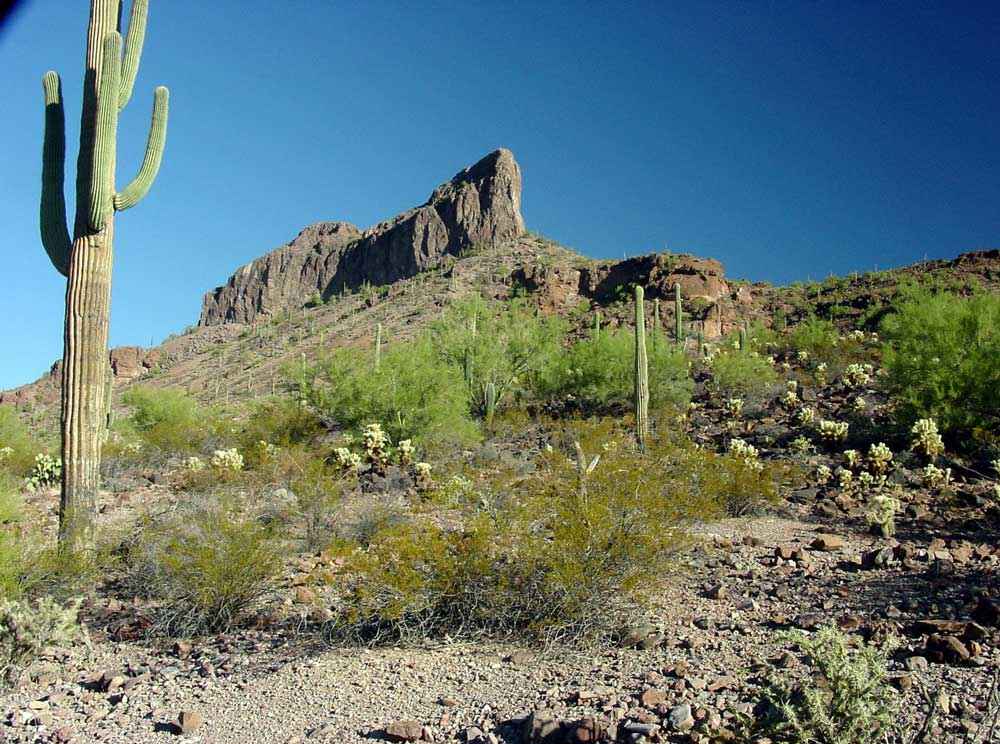
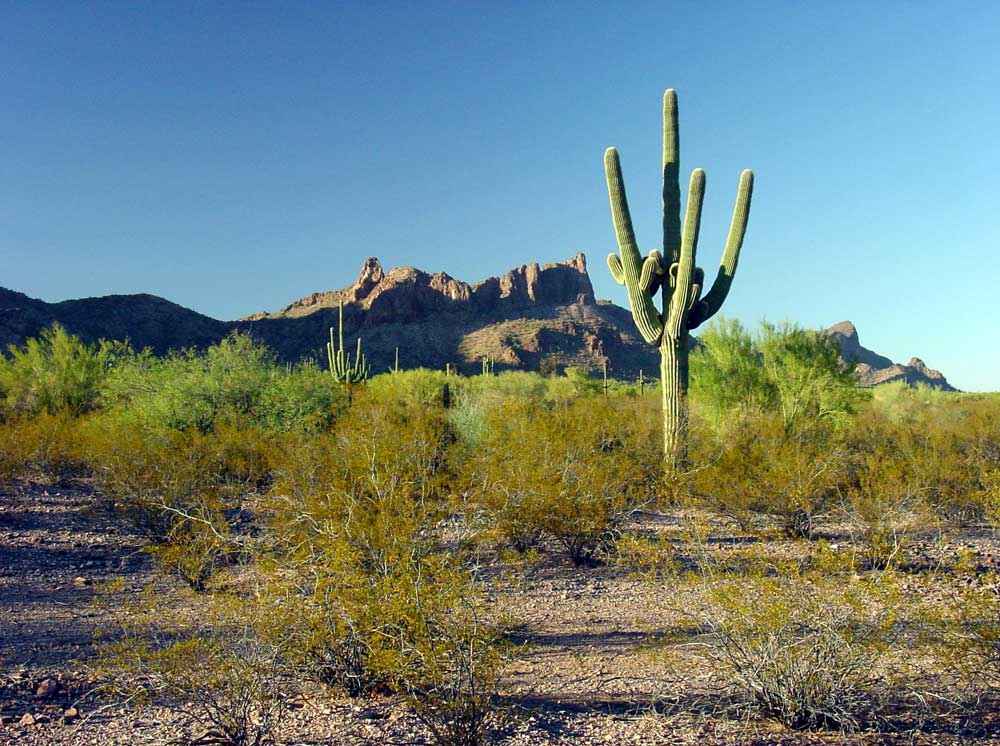
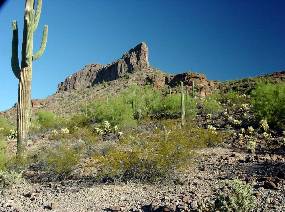
| The Sawtooth Mountains are small but angular, very scenic. Their vegetation is ordinary sparse Arizona Upland slopes surrounded by equally ordinary Lower Colorado River Valley desert (with one outstanding exception below). Despite the many distinctive peaks, most of them have no official names. We dubbed this one "Submarine Rock." |
 |
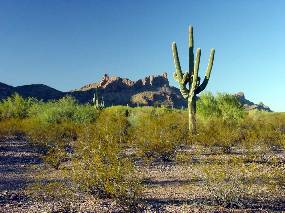
We found no ironwood trees in or near the Sawtooth Mountains. The slopes are too arid, and perhaps the valley drainages don't collect sufficient water to nourish them either. Ironwood trees are common in large washes west of here all the way to Palm Springs, California. |
 |
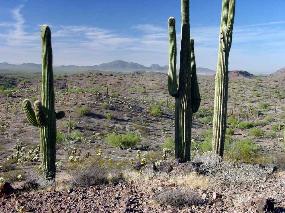 |
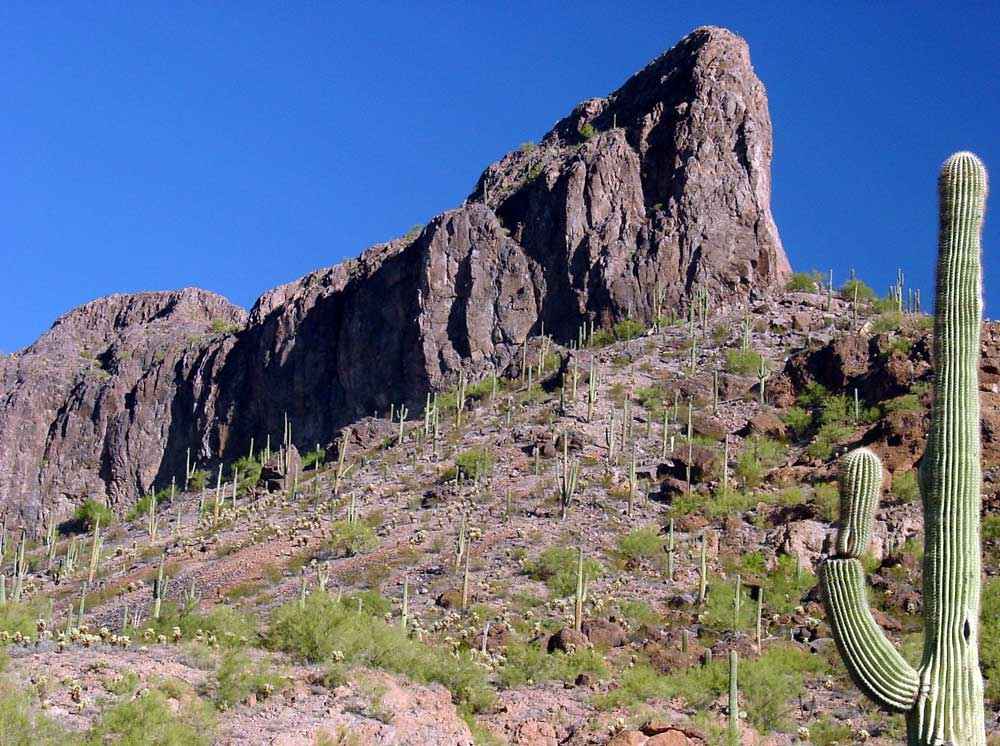
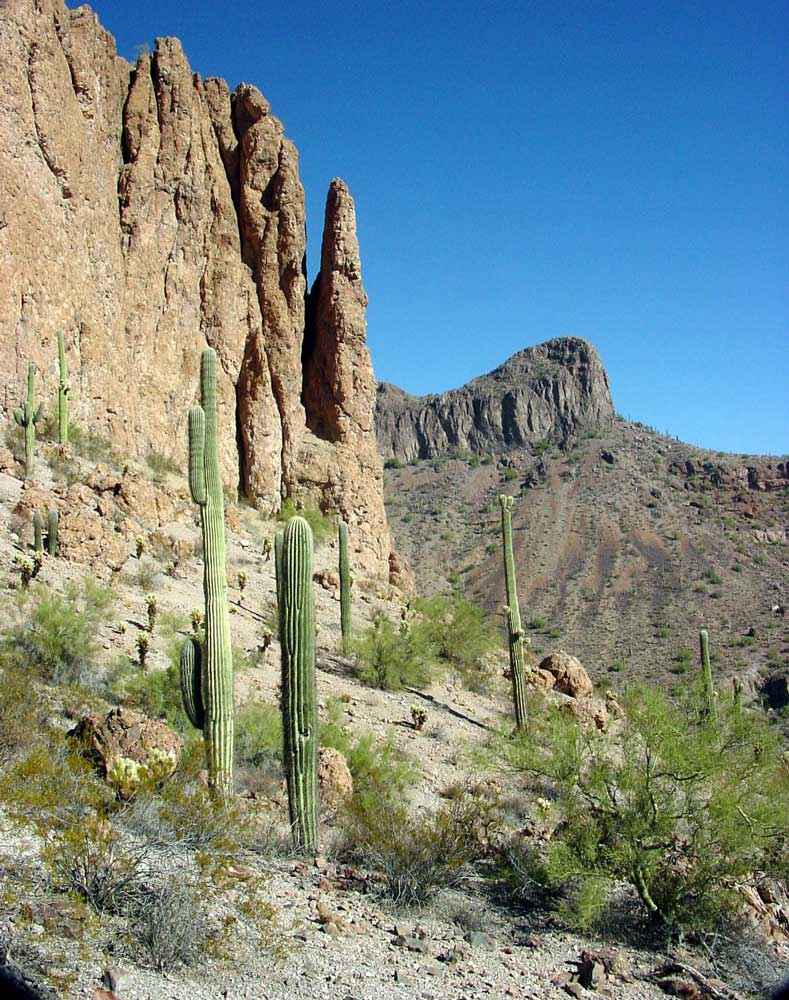
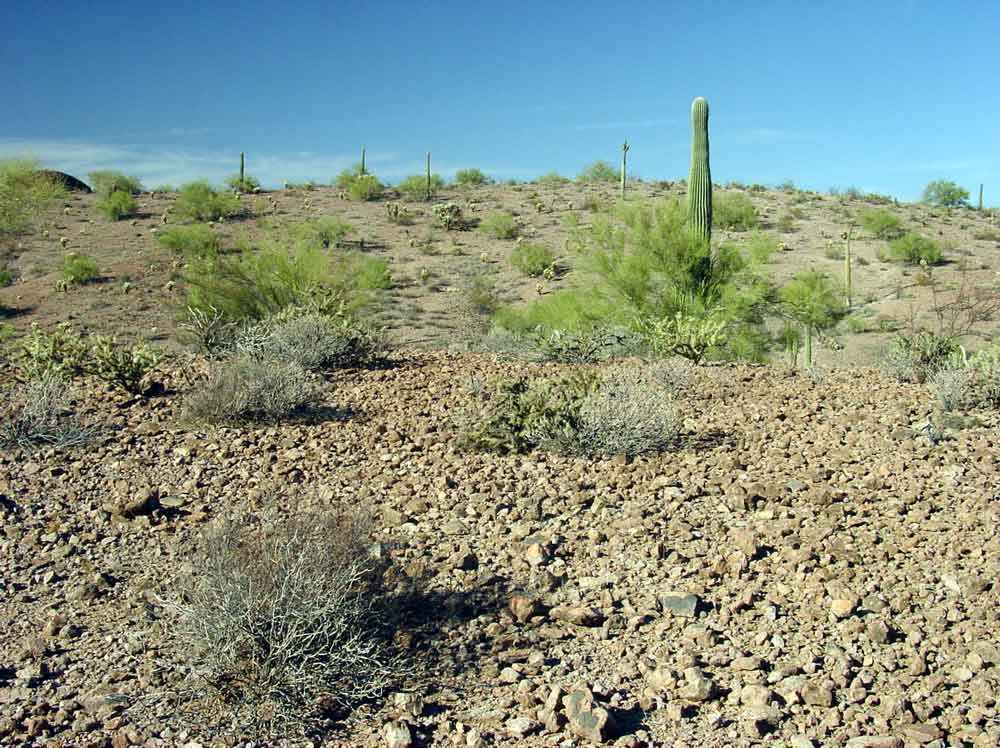
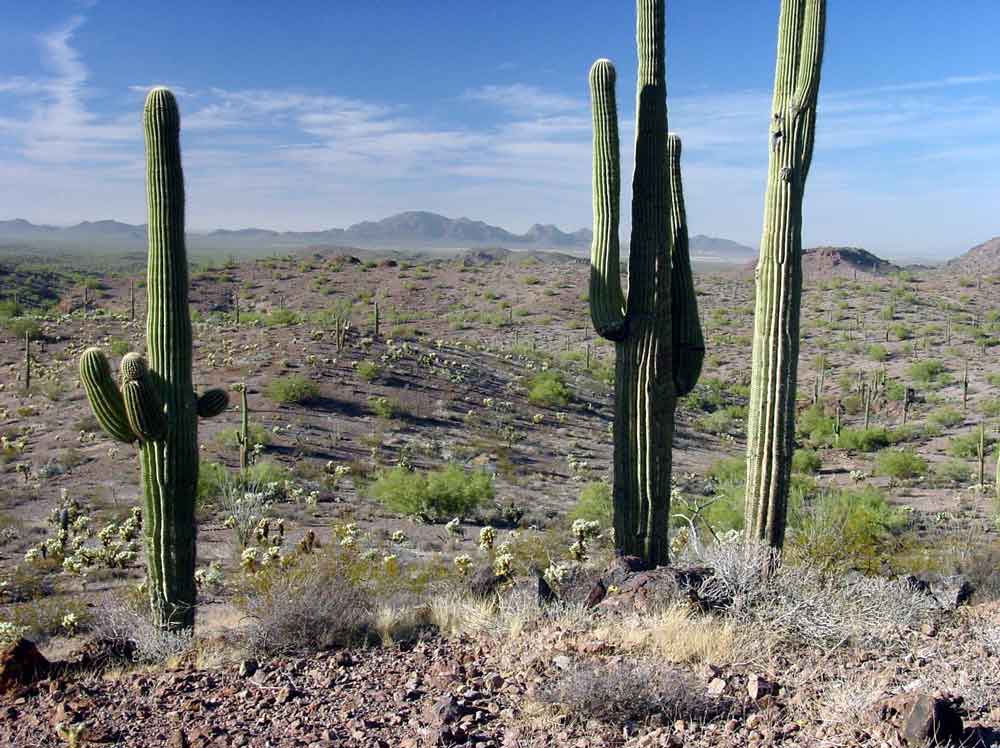
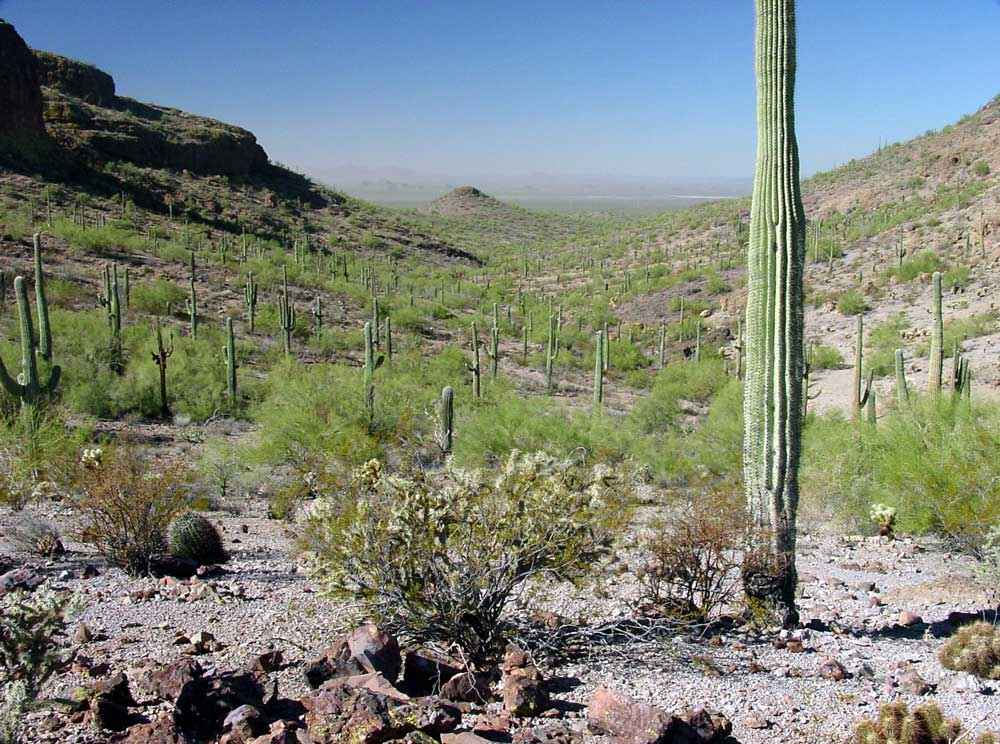
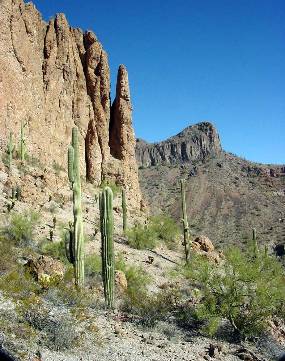
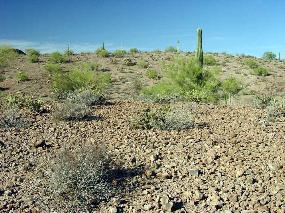
| Both above: Trees and saguaros are sparse in the Sawtooth Mountains because of the greater aridity than in more eastern areas of IFNM. Some maps include this range in the Lower Colorado River Valley subdivision of the Sonoran Desert instead of Arizona Upland. Classic LCV would have NO trees or saguaros on the slopes. |
 |
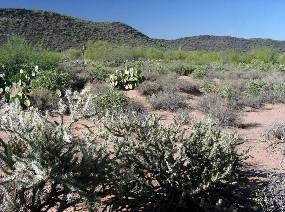 |
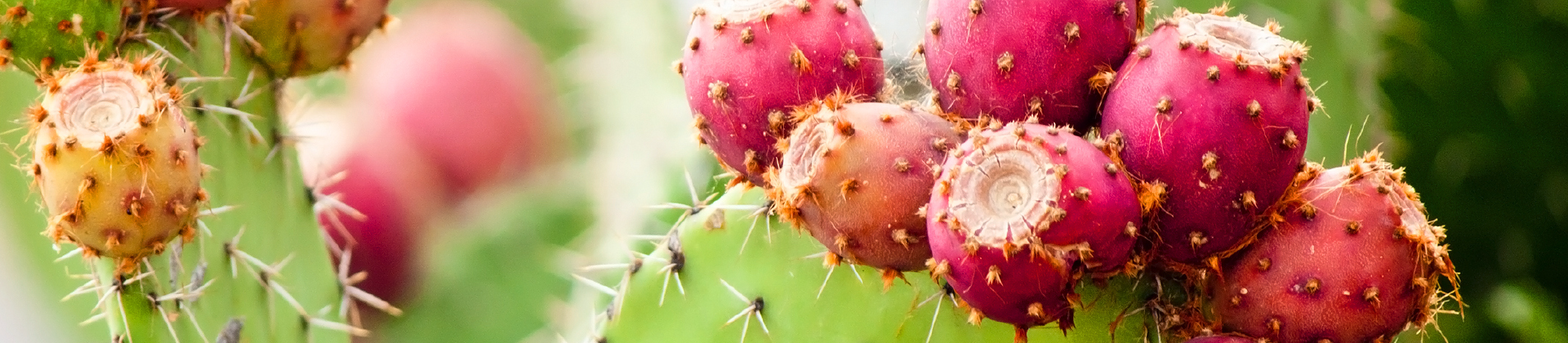
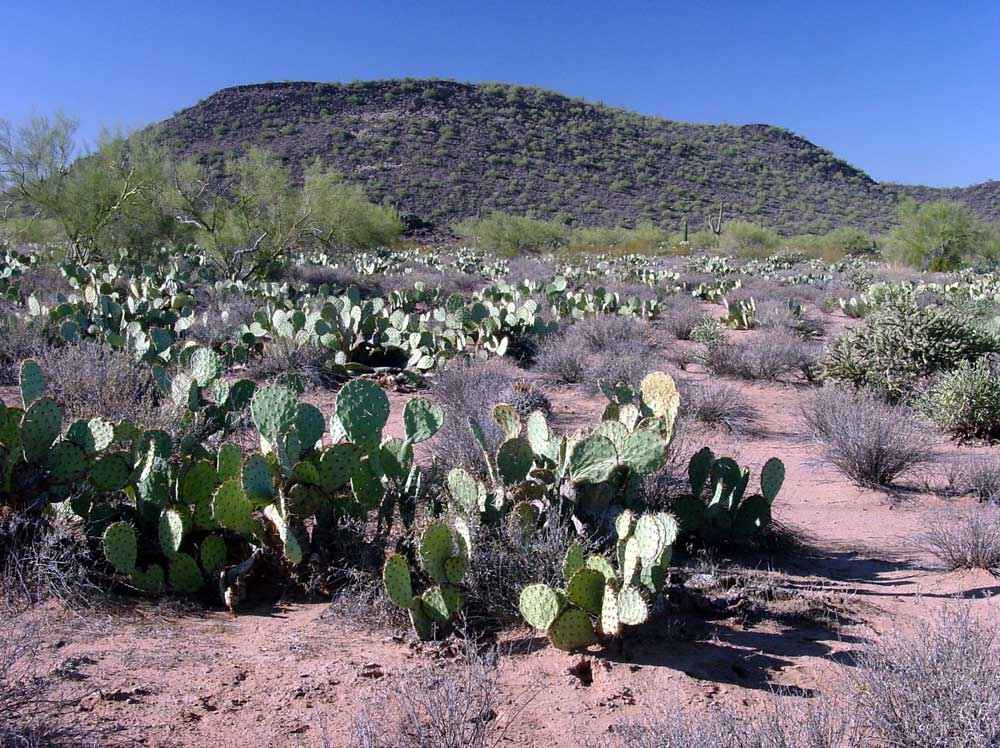
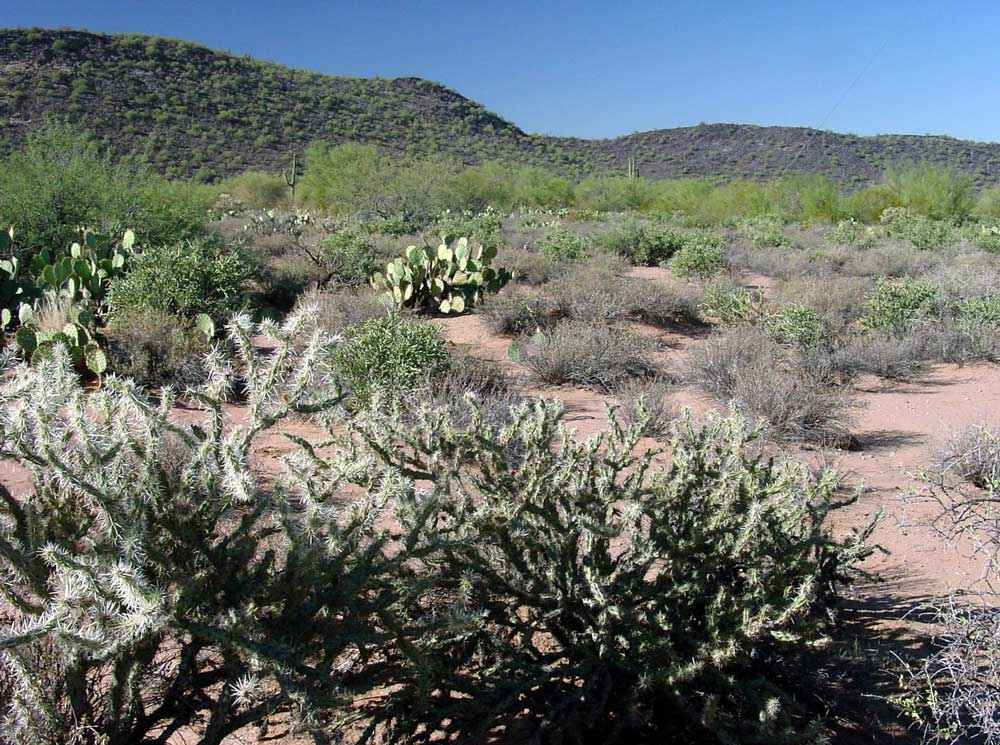
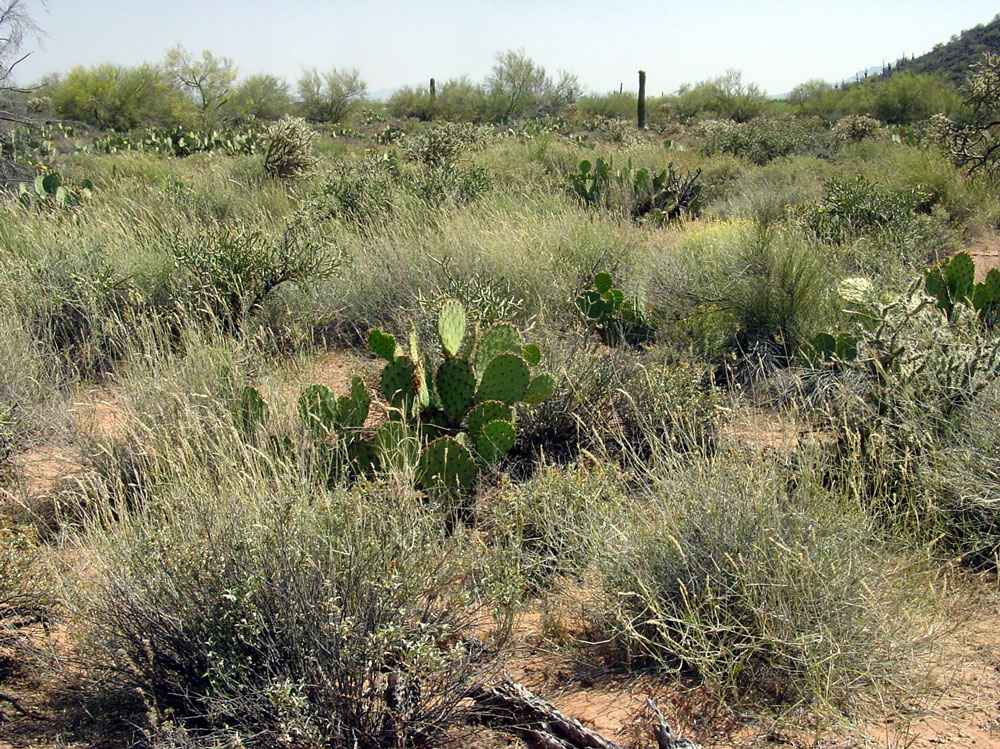
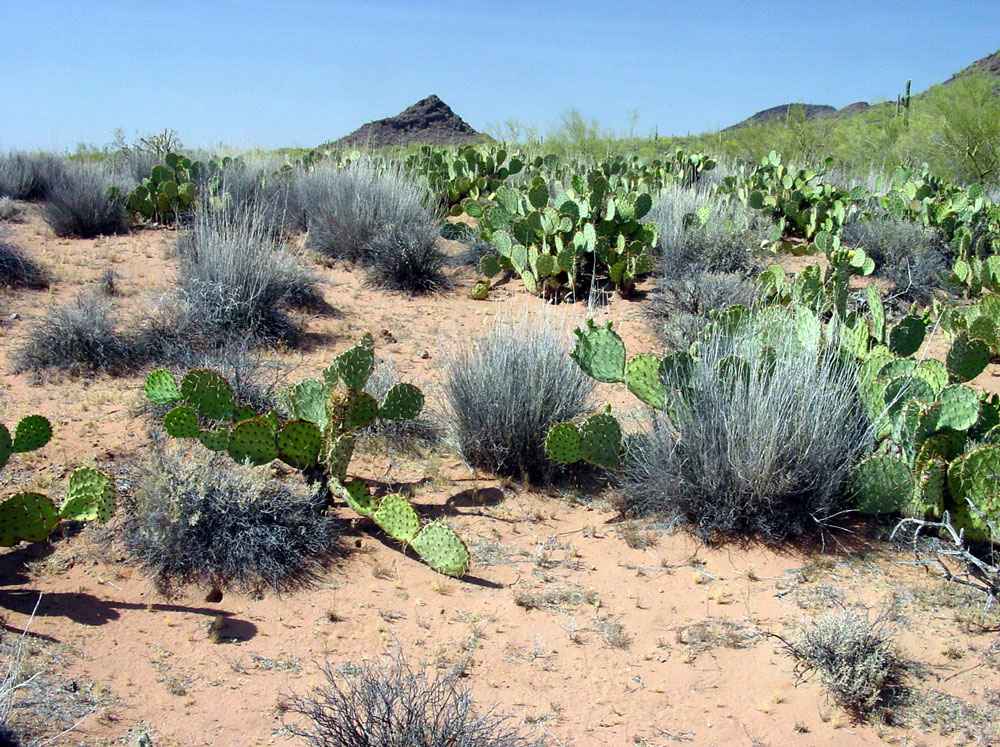
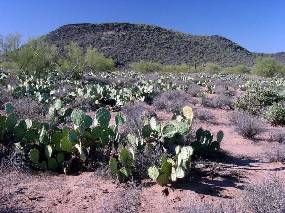
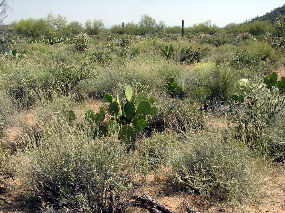
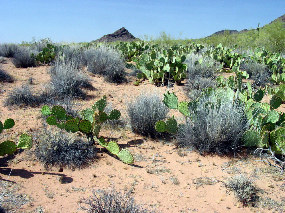
| Above and below: Just west of the Sawtooth Mountains at the edge of the Aguirre Valley (or Tat Momoli Valley?) is a small area of flat soft sand. This 130-acre sandy area is densely vegetated with several species of cacti, mostly prickly pears and chollas, growing among the palo verde trees. This is doubly remarkable in that cacti rarely grow well in sand, and IFNM has few areas of dense cacti. In some areas there are also dense patches of big galleta grass (Pleuraphis rigida), a common shrubby grass of hyperarid Sonoran Desert habitats. The only similar habitat we know of is the Bouse Dunes-Cactus Plain of west-central Arizona. In contrast, these "dunes" in IFNM have many more species and higher density of cacti. Furthermore, the Bouse Dunes are seriously degraded by a heavy infestation of Sahara mustard (Brassica tournefortii). This habitat has no significant nonnative plants. |
 |
 |
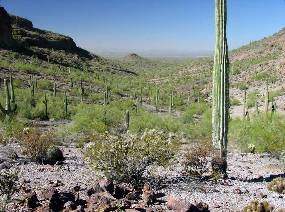
The Sawtooth Mountains currently present expansive, lonely landscapes. This will change in the future; major population growth is expected beyond the IFNM boundary just north of here. |
|
|

|
 TICKETS
 DONATE