TICKETS
 DONATE



WILDFLOWER FLOURISHES AND FLOPSSONORAN DESERT: LOWER COLORADO RIVER VALLEY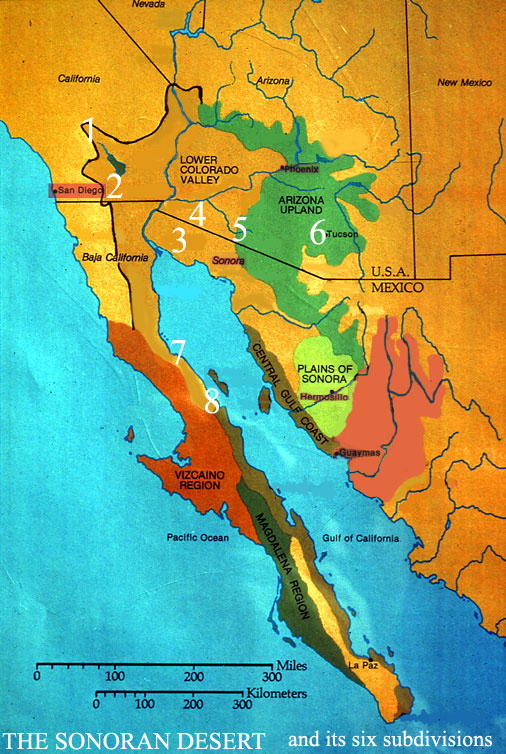 Most of the flower displays shown here were at the following localities:
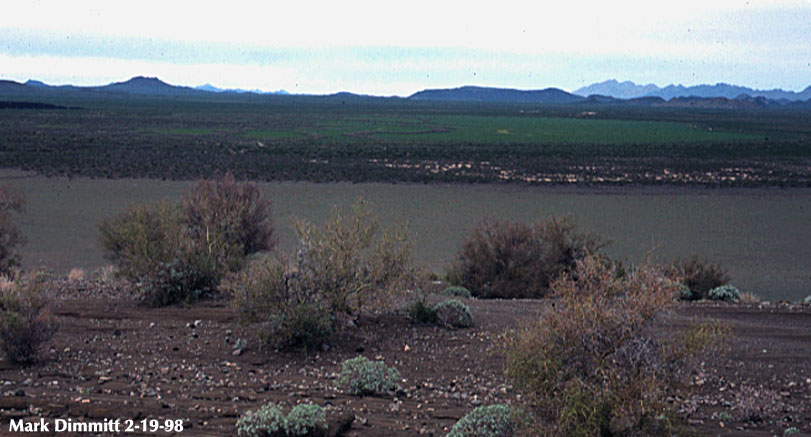
1: The Coachella Valley (Palm Springs, Banning Pass, Indio, etc.) 2: Eastern San Diego County, esp. Anza-Borrego Desert State Park 3: El Gran Desierto, including the Pinacate volcanic field 4: The Mohawk Dunes, a northern extension of the Gran Desierto. 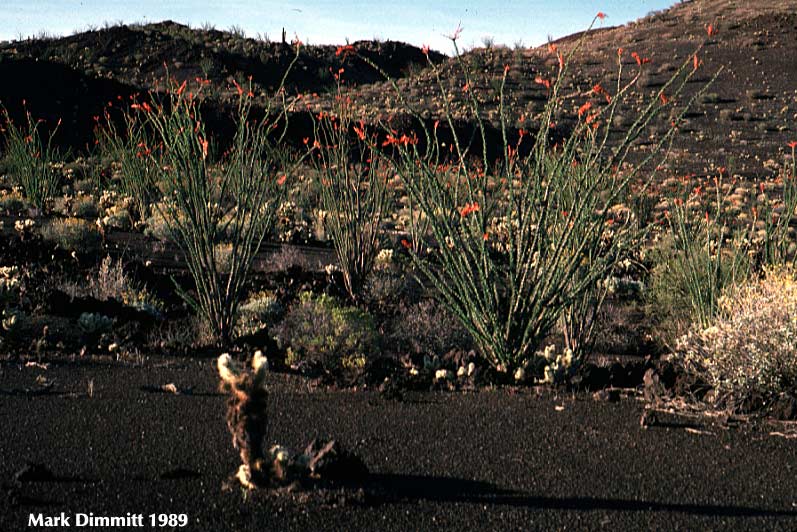 Tecolote campground in the Pinacate in March of a normal, dry year. Ocotillo almost always flowers but there were no annuals this year. 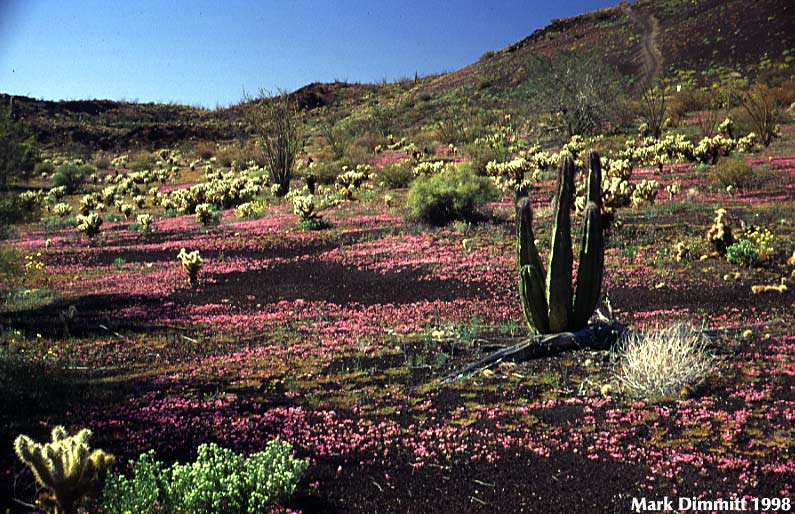 The same area in March of 1998, one of the wettest years on record Yuma Rainfall (inches):
Wildflower patches were few in 1970. The areas shown here probably received extra rain from isolated showers or runoff that collected in drainages. 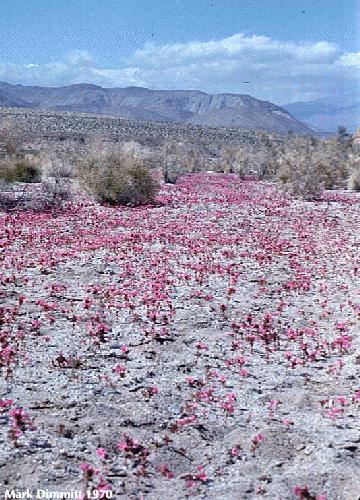
A wash full of Mimulus bigelovii (monkeyflower) in Anza-Borrego Desert State Park, CA. 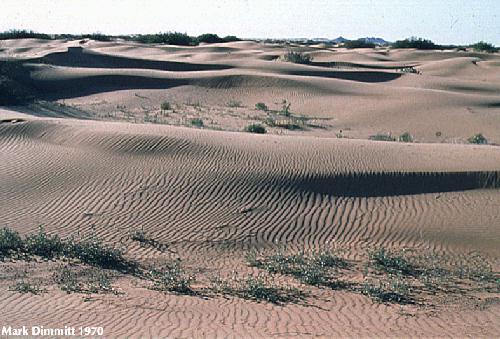
El Gran Desierto dunes 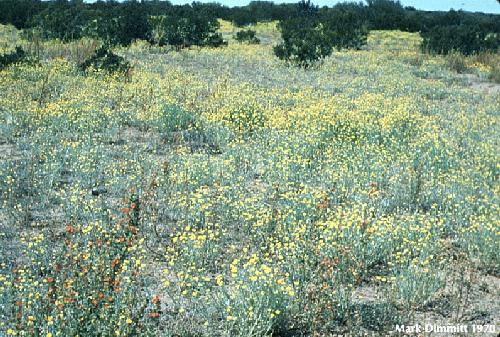
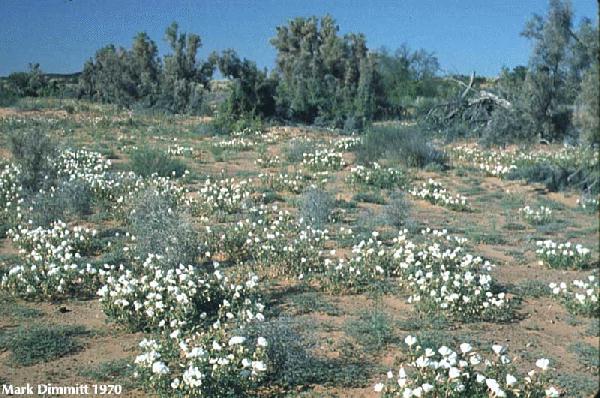
Some washes in the Pinacate supported stands of annuals. These two had different soil textures and were covered with either Baileya pauciradiata (desert marigold) or Oenothera deltoides (dune evening-primrose). Yuma Rainfall (inches):
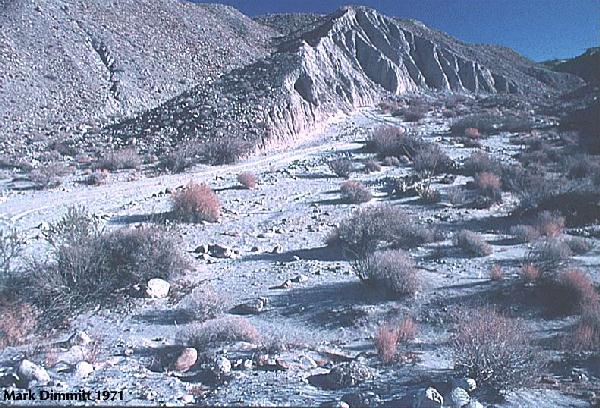
 This is what a year with almost no rain looks like. Anza-Borrego Desert State Park. Yuma Rainfall (inches):
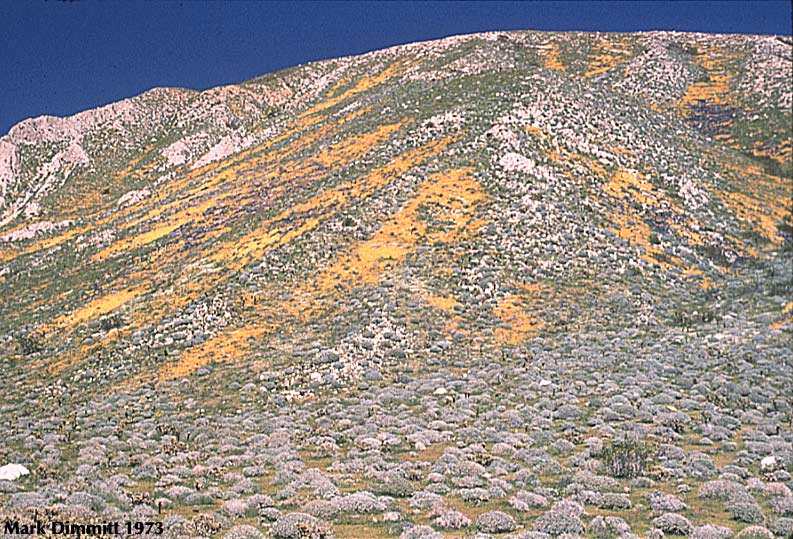
Banning Pass near Palm Springs is on the extreme western edge of the Sonoran Desert. Storms funnel through the pass from the coast and drop perhaps twice as much rain here as Palm Springs gets in the rain shadow of the San Jacinto Mts. 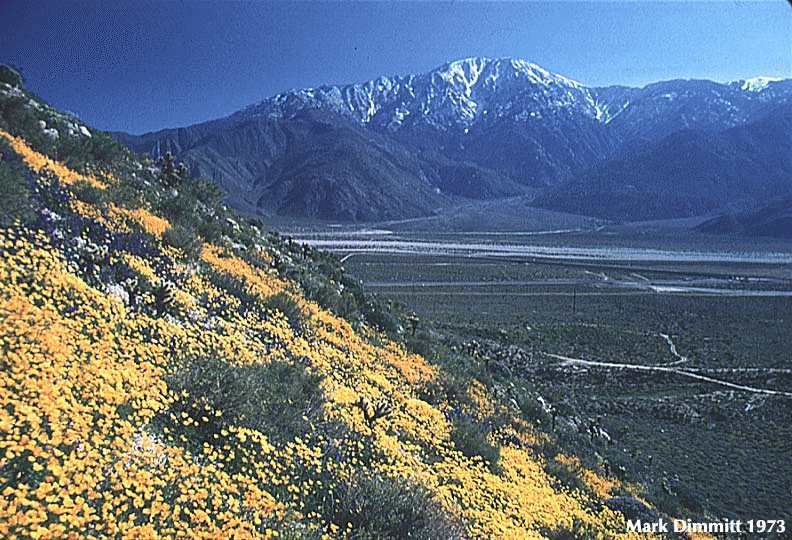
A hillside covered with flowers. Mt San Jacinto is across the valley. 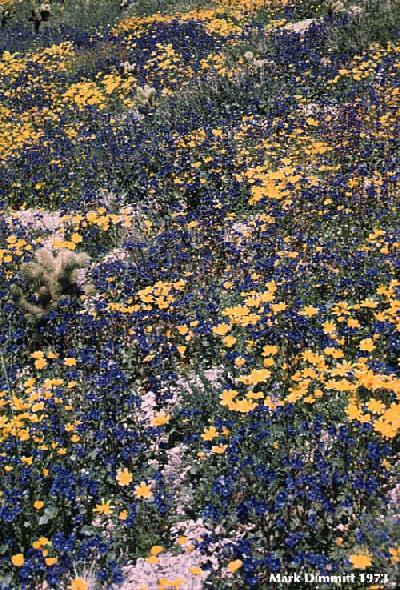
This hillside is coarse loose gravel; almost the only perennial vegetation is the teddy bear chollas seen among the flowers. The yellow ones are Coreopsis bigelovii and the blue are Phacelia campanularia (desert blue bells). The deep blue is difficult to capture on film. 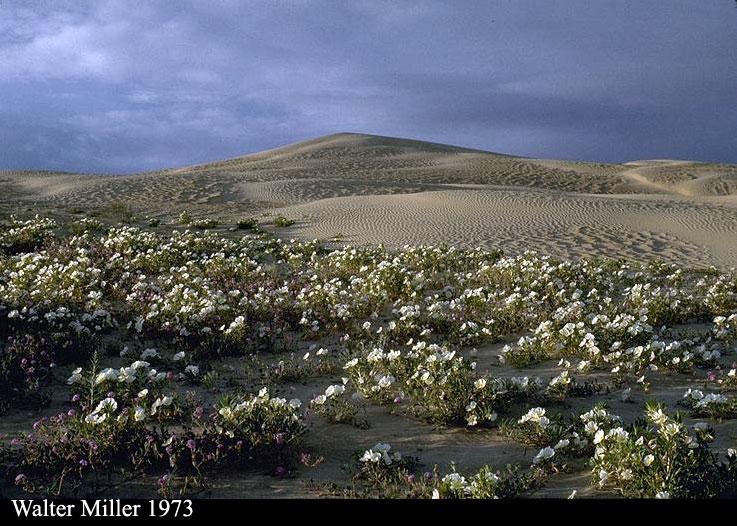
The Algodones Dunes in California west of Yuma, Arizona were carpeted with dune evening primrose. 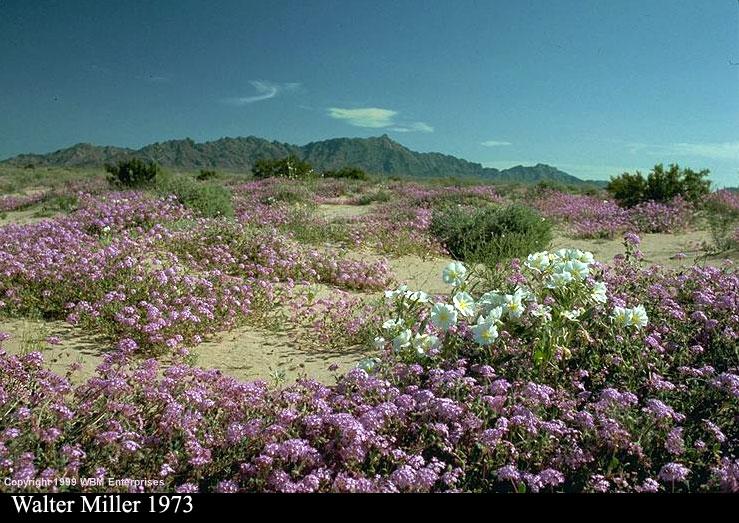
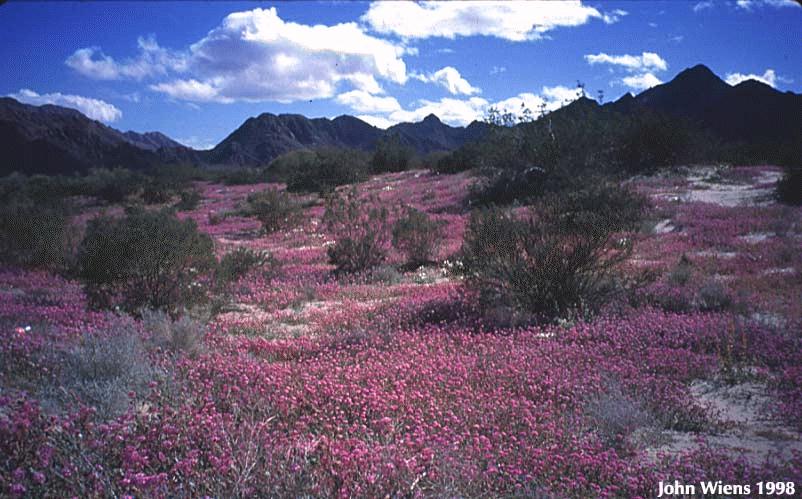
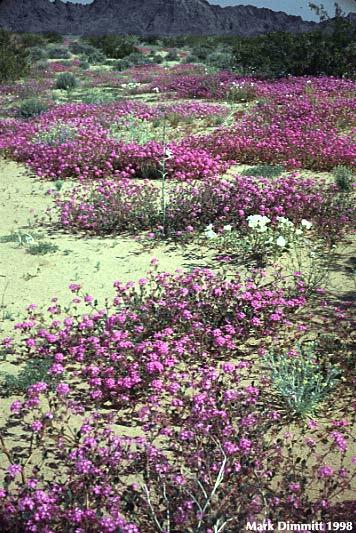
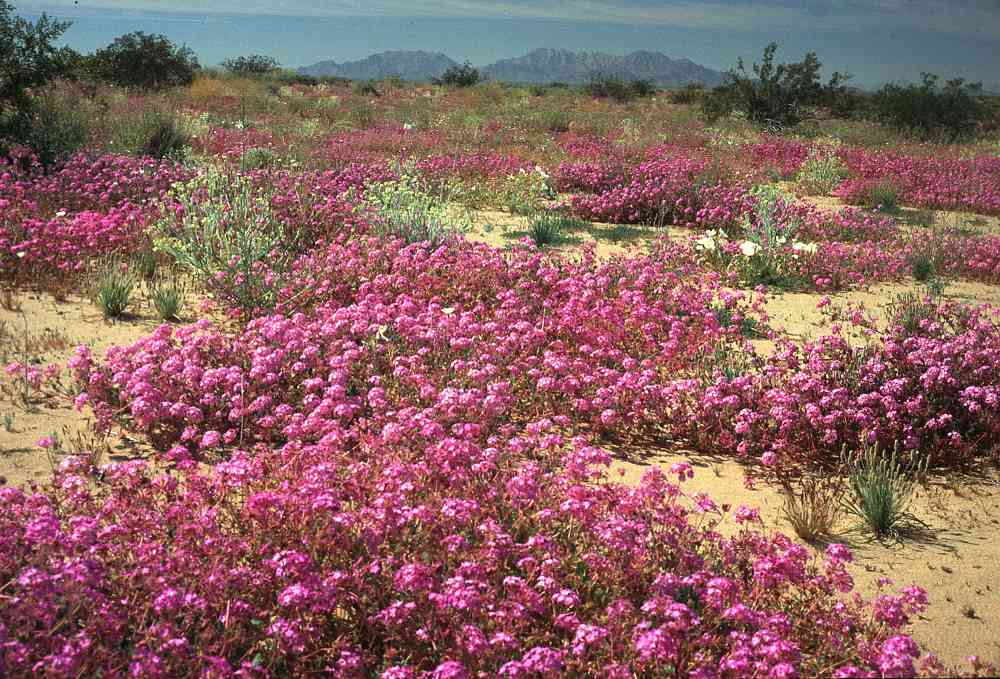
The Mohawk Dunes east of Yuma were also wet and colorful, with more sand verbena than primrose. See more images of the desert and other places at the Ramblin' Cameras website Yuma Rainfall (inches):
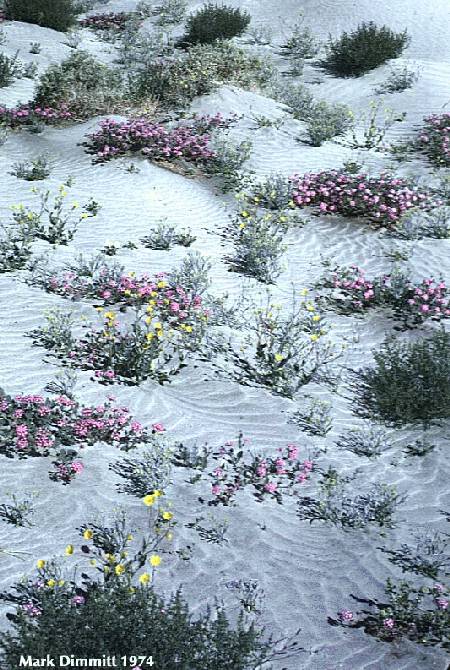
Even in dry years some places may get lucky. In 1974 the Coachella Valley (e.g., Palm Springs) received just enough rain to grow some flowers on the dunes. The dark green mounds are Russian thistle (tumbleweed), a pernicious exotic weed that in wetter years can smother native wildflowers. Yuma Rainfall (inches):
Yuma received little rain in the winter of 1976-77. But in September 1976 the remains of Hurricane Kathleen dropped several inches of rain in the desert to the west. The result was stunning. Anza-Borrego Rainfall (inches):
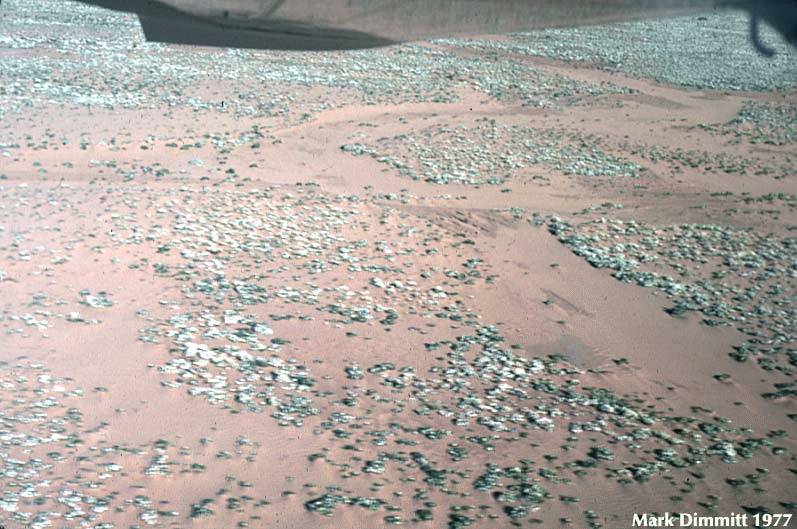 Aerial views of the Palen sand dunes near Desert Center, CA. The white patches are Oenothera deltoides (dune evening-primrose).  On the ground the scene was incredible. 
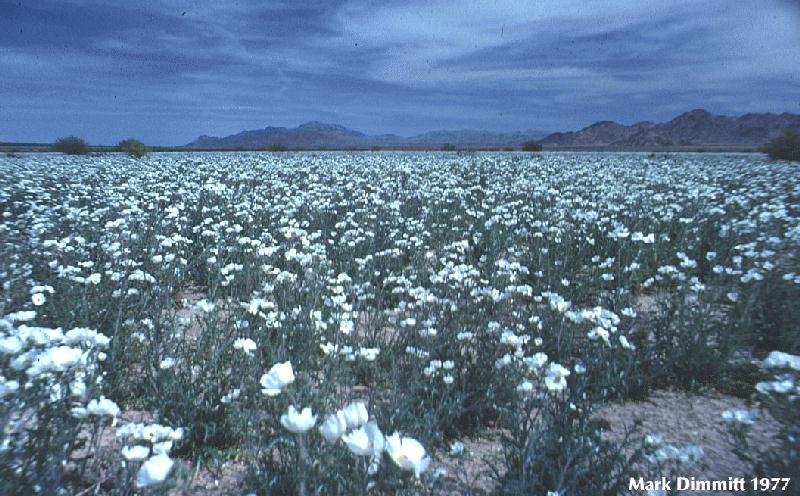
Hayfield Dry Lake west of Desert Center, CA filled with water from Hurricane Kathleen. The next spring the lake bed was a nearly impenetrable mass of Argemone munita (prickly poppy) three feet tall. I have never seen flowers in this lake before or since 1977. Yuma Rainfall (inches):
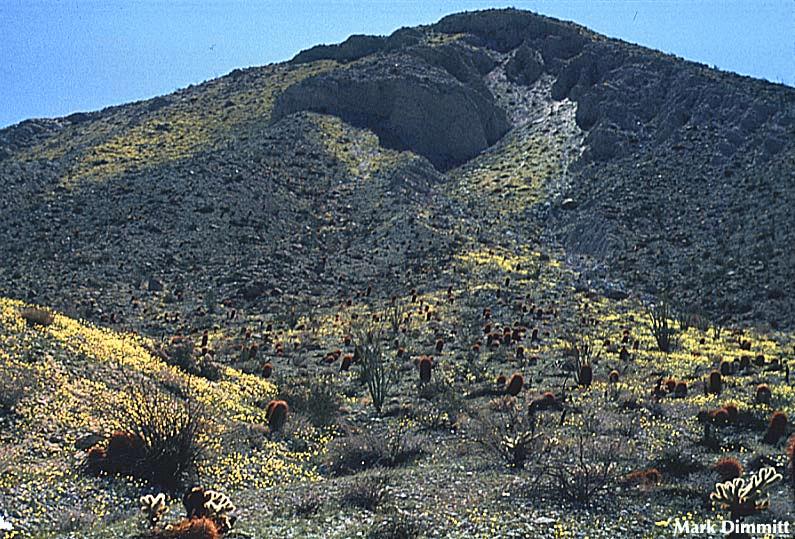
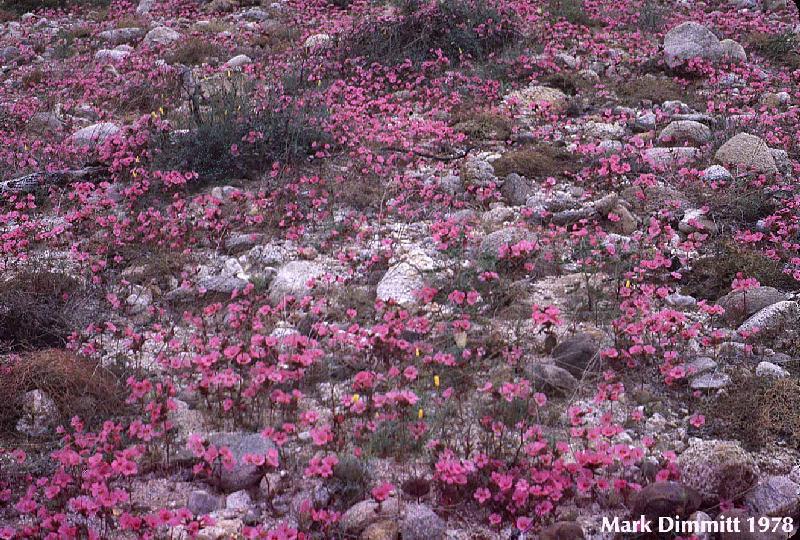
Anza-Borrego Desert State Park had a banner year. The first photo is a hill of Eschscholtzia parishii (relative of California poppy); the second is a hill of Mimulus bigelovii (desert monkeyflower). 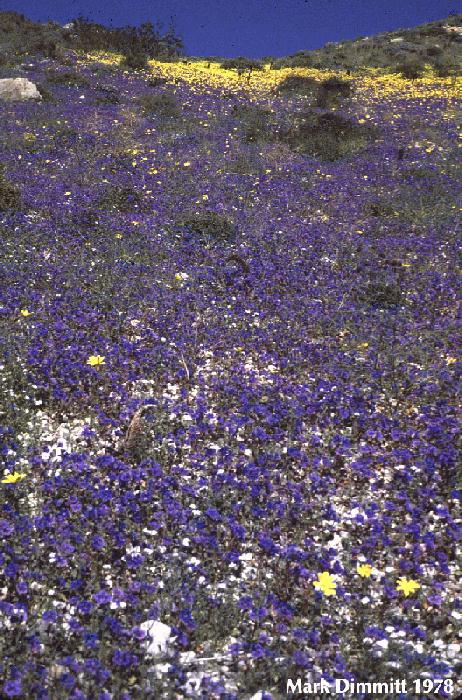
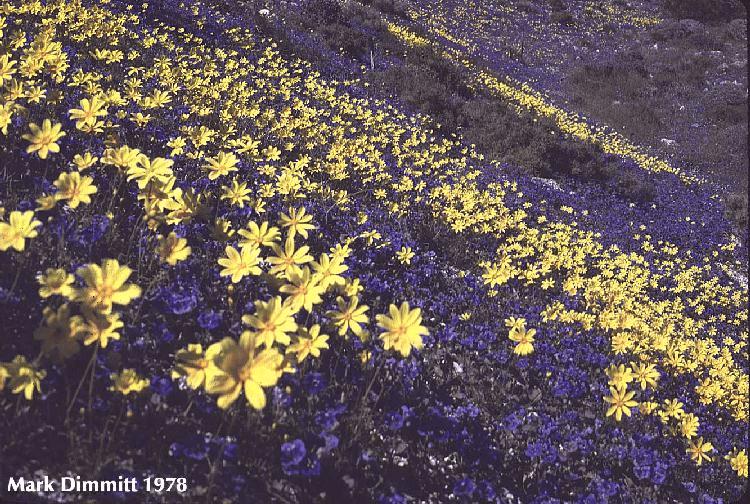
Banning Pass exploded again in 1978. This hill is accessed by the Verbenia (sic) Avenue exit of I-10. Coreopsis bigelovii and Phacelia campanularia. Yuma Rainfall (inches):
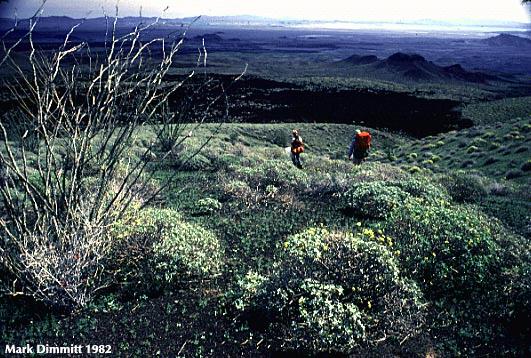
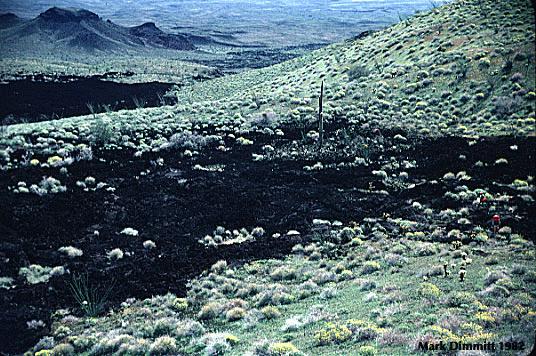
The Pinacate turned very green in 1982; there must have been more rain here than in Yuma. But there were very few showy-flowered species among these carpets of annuals so little color developed except for the verdant green. Yuma Rainfall (inches):
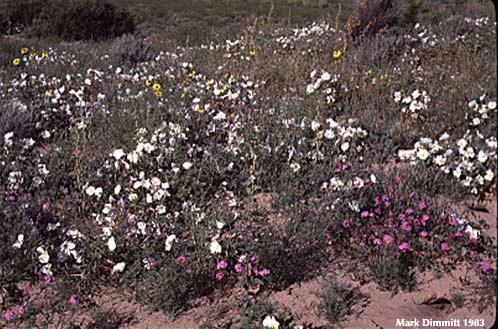
The dunes of the Gran Desierto were almost completely covered with annuals in 1983. I was too late to catch the color. 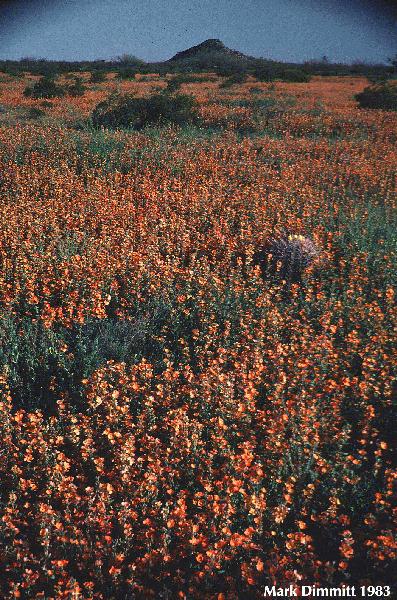
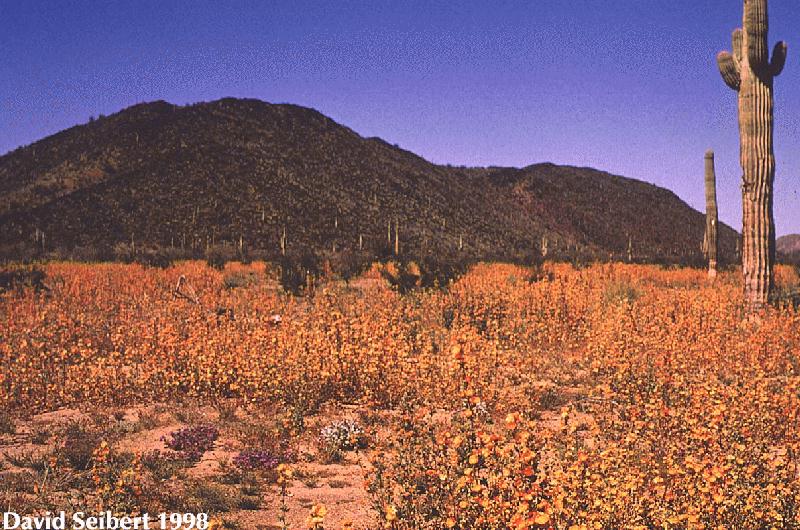
Field of annual globemallow (Sphaeralcea cf. coulteri) on the Tohono O’odham Indian Reservation west of Tucson. Yuma Rainfall (inches):
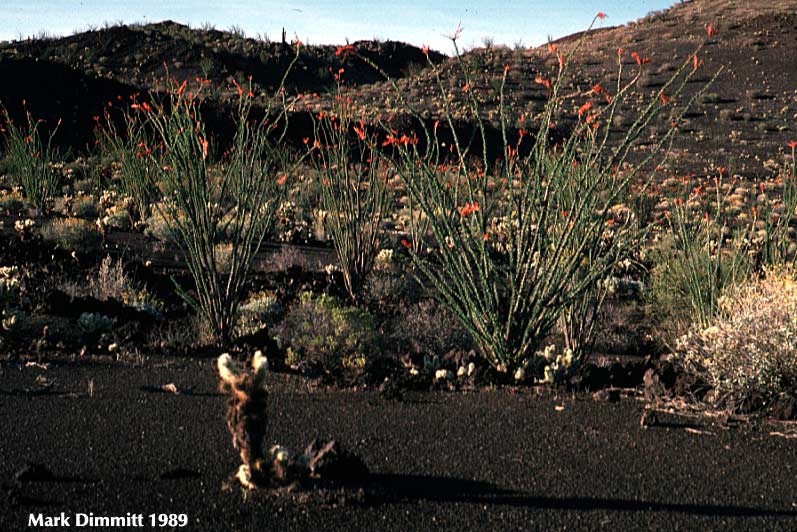
No annuals, but ocotillo almost never fails to bloom. Yuma Rainfall (inches):

In many years the Pinacate receive little or no rain. This is the normal condition for this extremely arid region of the Sonoran Desert. Yuma Rainfall (inches):

In 1991 the Pinacate received just the right amount and timing of rain to sprout skeleton weeds (Eriogonum spp.). These plants are only a few inches tall and grew only where a layer of volcanic cinders mulched the fine silty soil below. Yuma Rainfall (inches):
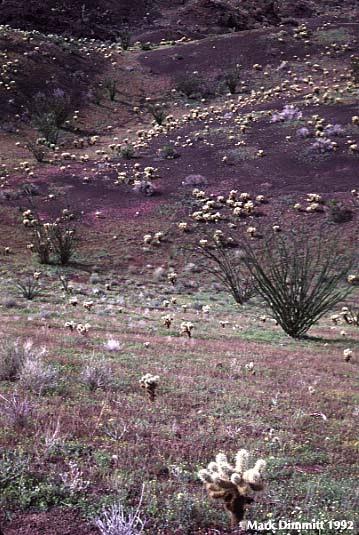
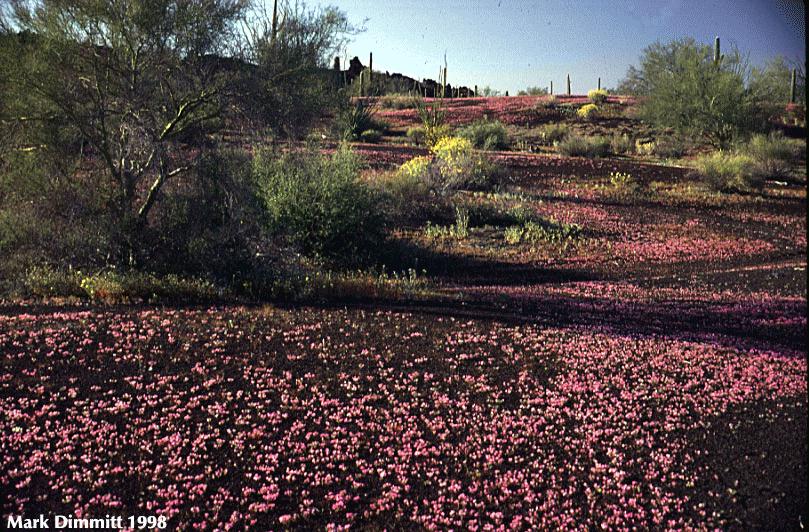
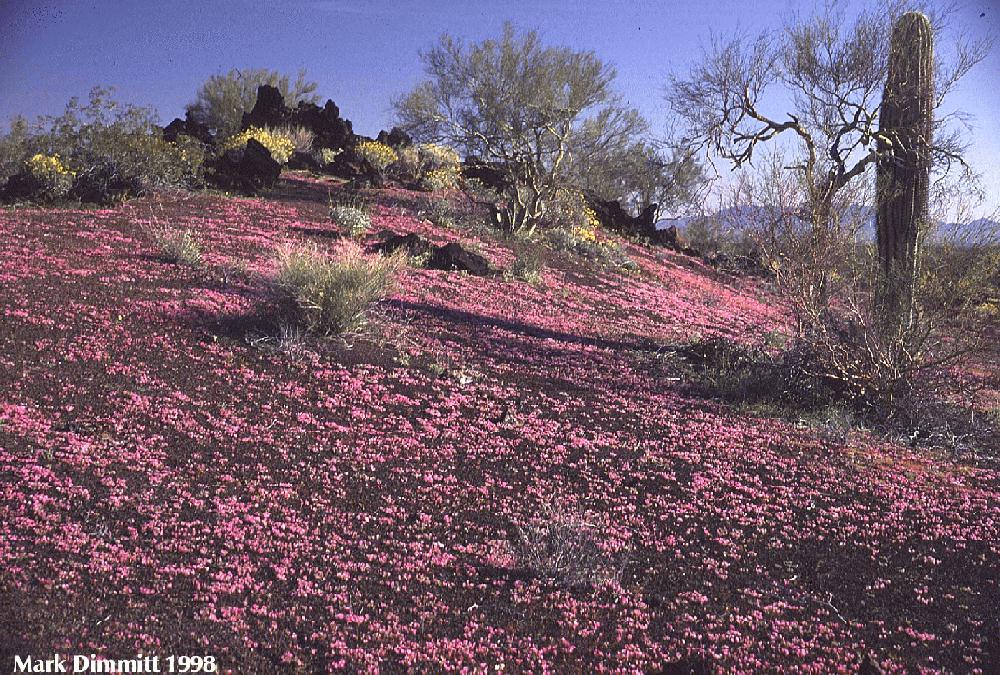
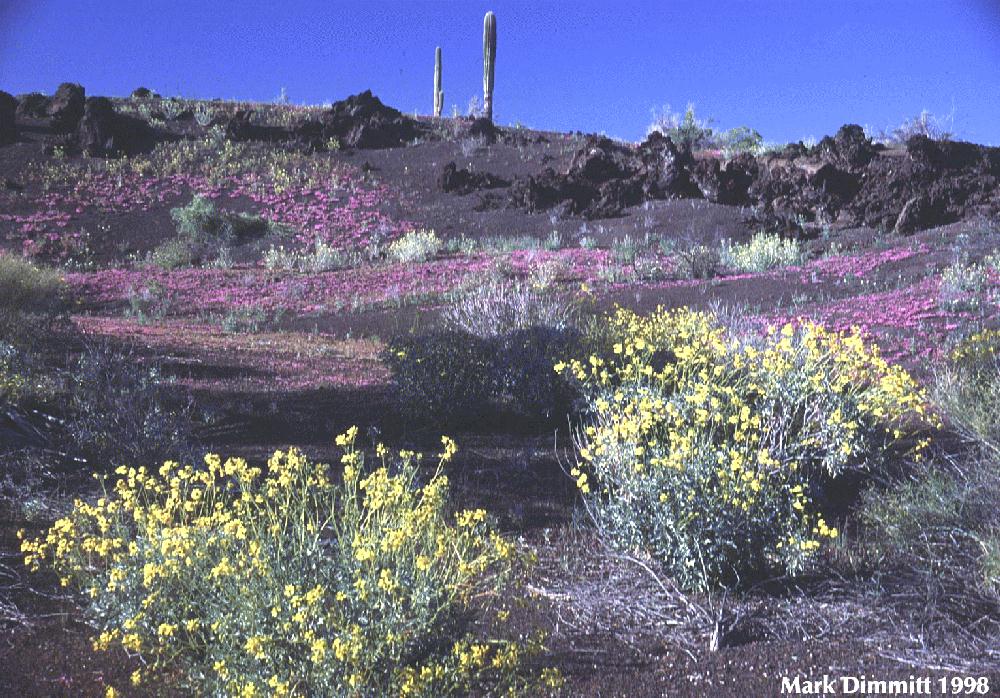
The Pinacate had a fairly wet year but most of the annuals were inconspicuous species. A lavender tint can be seen from the few Nama demissum (purple mat) showing through the taller plants. Compare with photo of the same site in 1998. Yuma Rainfall (inches):
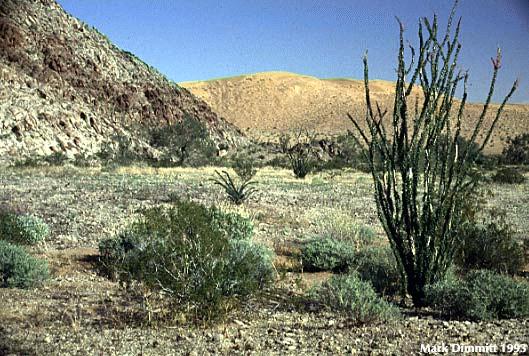
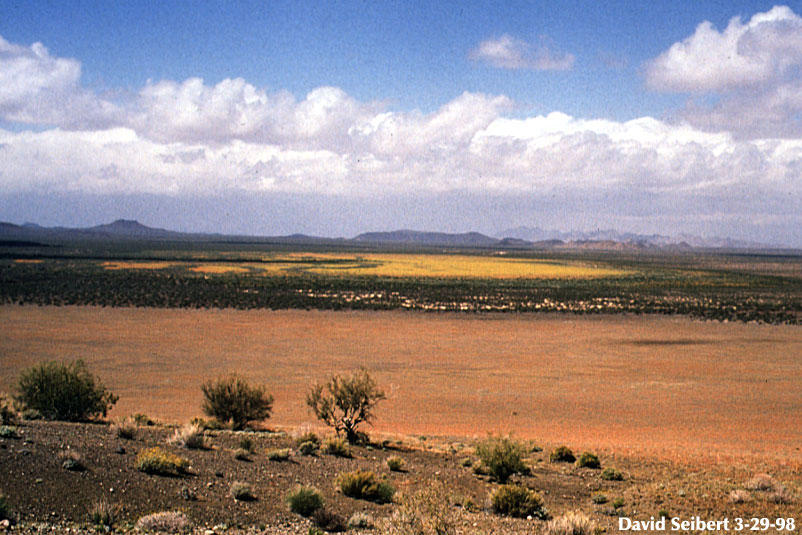
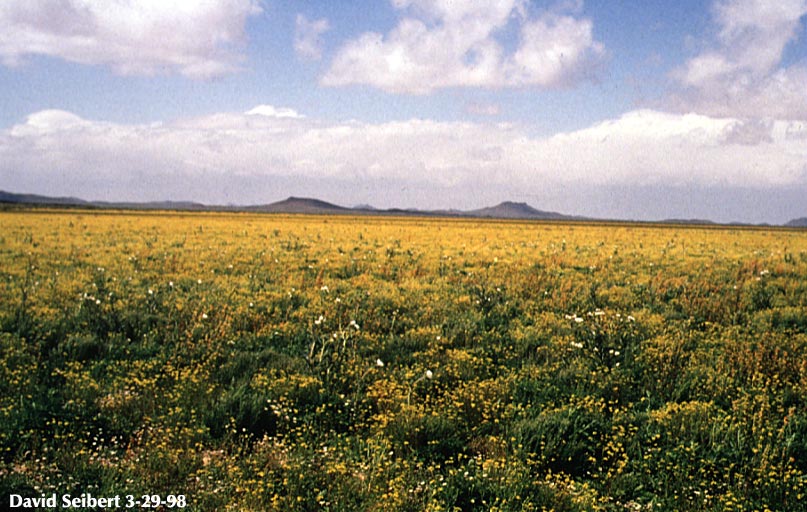
Another wet year, but little seems to have come of it. This scene on the edge of the Gran Desierto is green with seedlings, but we haven’t found anyone who saw flower displays. Yuma Rainfall (inches):
* Winter 1999-2000 was extremely dry. But there were a few isolated storms that triggered small areas of wildflower blooms. 
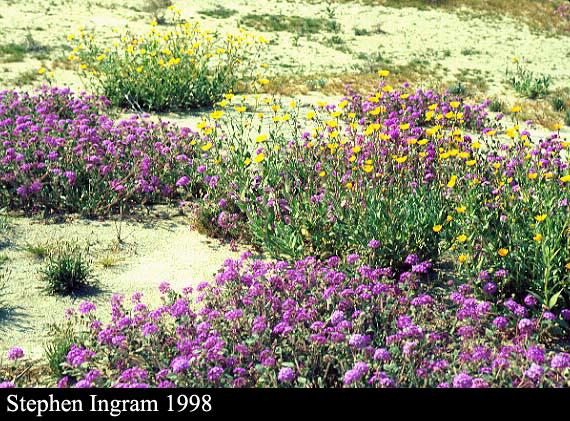
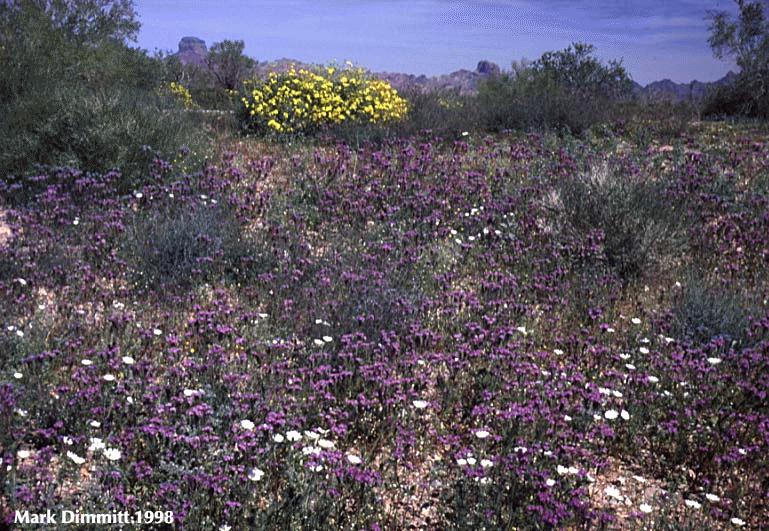
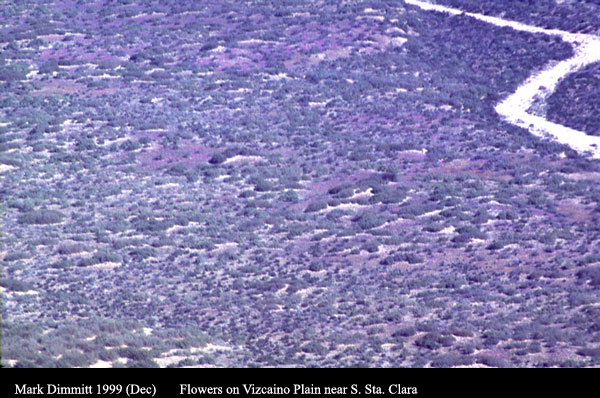
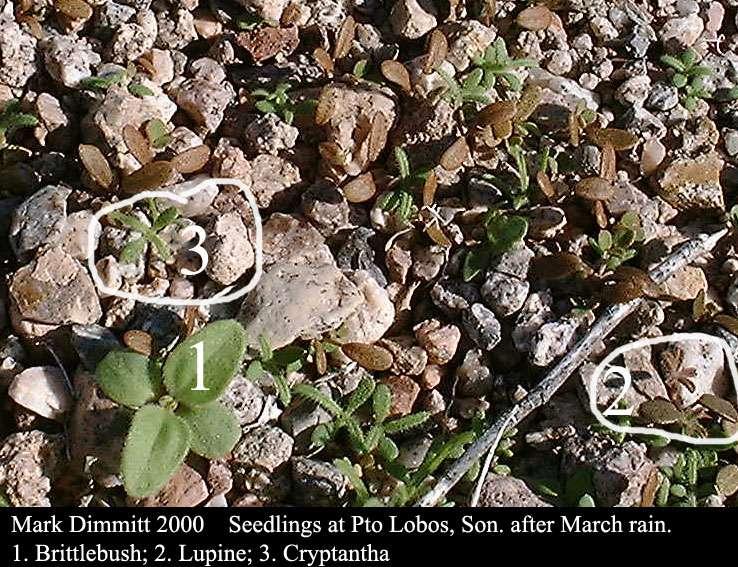
SURPRISE! Almost the entire 450-mile stretch of Interstate 10 between Tucson, Arizona and Palm Springs, California was parched and brown this winter. But an isolated storm brought rain to a tiny patch of sand dunes west of Blythe, California. These images were taken on December 27, 1999 at the Wiley's Well exit. The sand verbena (lavender) were past their peak and drying out, but the evening-primroses (white) and desert sunflowers (yellow) were just beginning to flower. There was a similar patch of wildflowers in the remote center of the otherwise shriveled Vizcaino desert in Baja California. After a nearly rainless winter, a major storm in March drenched much of the Sonoran Desert. Such late rains do not trigger germination of annuals in the desert of southern Arizona or California, but the same species respond differently in more arid subregions. Puerto Lobos is on the coast of Sonora at the boundary between the Lower Colorado River Valley and Central Gulf Coast subregions. The past few years have been so dry that many of the shrubs were dying from drought. The March rain triggered mass germination of annuals and perennial shrubs (below). This area should have turned purple with lupines in April, but it is so remote that most likely no photographer was there to document it. 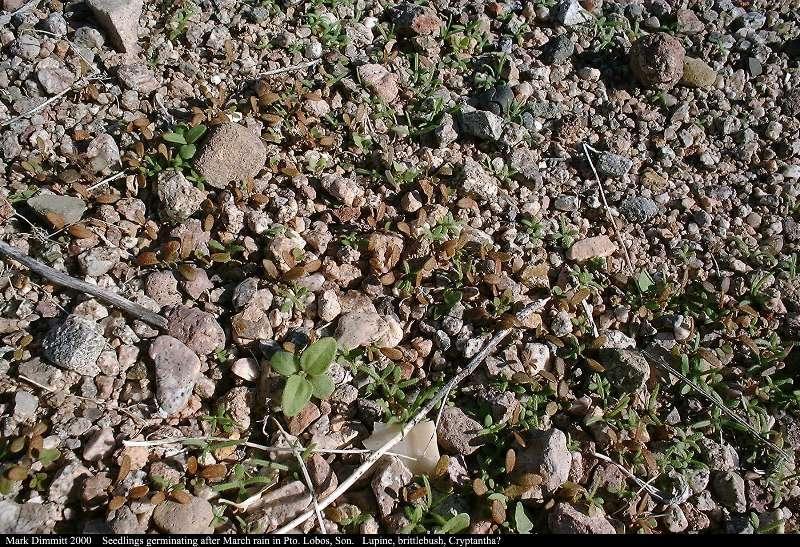
|