 TICKETS
 DONATE


The Sonoran Desert Tortoise (Gopherus morafkai)
A Natural History
Produced by the Arizona-Sonora Desert Museum's Tortoise Adoption Program
Tortoises in General
The tortoises comprise the turtle family Testudinidae consisting of thirty-nine living species in ten genera. Today, tortoises are found in Asia, Europe, Africa, oceanic islands and the Americas. Included among these are two gigantic forms, the well-known Galapagos tortoise (Geochelone elephantopus) of the Galapagos Islands in the Pacific Ocean and the Aldabran tortoise (G. gigantea) of the Seychelles Island in the Indian Ocean. Given the ling evolutionary history of tortoises in North America and the dynamic environment of the last thirty million years, it is indeed remarkable that the form of the four living North American tortoises have changed so little from their ancestors. One of these, the Sonoran desert tortoise, (Gopherus (xerobates) morafkai) is found throughout much of the Sonoran Desert region and is therefore of special interest.
Tortoises may be distinguished from other turtle families by the following characteristics: the hindlegs are cylindrical and elephantine in shape: the feet are short, broad and club-shaped. In some genera, the forelimbs are flattened and adapted for digging and burrowing and the toes are completely unwebbed. The carapace (upper shell) is usually high and domed with the ribs modified in alternating triangular wedges. All are terrestrial and basically herbivorous, although they may occasionally eat invertebrates and carrion.
Classification of North American Tortoises
North American tortoises are grouped in the genus Gopherus although two distinctive groups, considered by some authorities to represent subgenera, are now recognized. The primitive gopher tortoises, including the Sonoran desert tortoise (G. (xerobates) morafkai) and the Texas tortoise (G. (x.) berlandieri), are grouped in the subgenus Xerobates. The gopher tortoise (G. (g.) polyphemus) and the bolson tortoise (G. (g.) flavomarginatus) are more advanced tortoises in the subgenus Gopherus in the genus Gopherus. This arrangement clarifies the evolutionary relationships among the living North American tortoises as presently understood.
Natural History of the Desert Tortoise
The desert tortoise, an ancient denizen of western North America, occurs today in the Mohave and Sonoran deserts in southwestern Utah, southern Nevada, southeastern California and western Arizona in the United States. In Mexico,"la tortuga de tierra" occurs throughout most of Sonora, including Isla Tiburón in the Gulf of California and south into northwestern Sinaloa.
Considerable variation in its ecology, behavior, morphology, and DNA has been noted in different portions of its range. Three distinctive subspecific populations have been defined in the Mohave Desert, Sonoran Desert, and tropical deciduous forest. The desert tortoise lives in a variety of habitats form sandy flats to rocky foothills, with a strong proclivity in the Mohave Desert for alluvial fans, washes and canyons where more suitable soils for den construction might be found. It is found from near sea level to around 3,500 feet in elevation.
The desert tortoise reaches an average length of 6 to 14.6 inches, with males growing larger than females. A gigantic specimen, allegedly from Mexico, at the San Diego Natural History Museum, has a shell of 15.9 inches long. Other large individuals have been found in the Mohave Desert in California.
The desert tortoise occurs in a number of plant communities ranging from sparse creosote bush desertscrub in the winter rainfall Mohave Desert to palo verde-saguaro desertscrub in the bi-seasonal Sonoran Desert and eventually to summer rainfall tropical thornscrub and deciduous forest in Sonora and Sinaloa. In the Sonoran Desert, tortoise density seems to be related to the density of perennial plants and plant species composition which are controlled by the amount of rainfall and winter freeze frequency. Prior to the early 1950's, many populations reached densities of several hundred tortoises per square mile. Today, most populations contain no more than five to fifty tortoises per square mile.
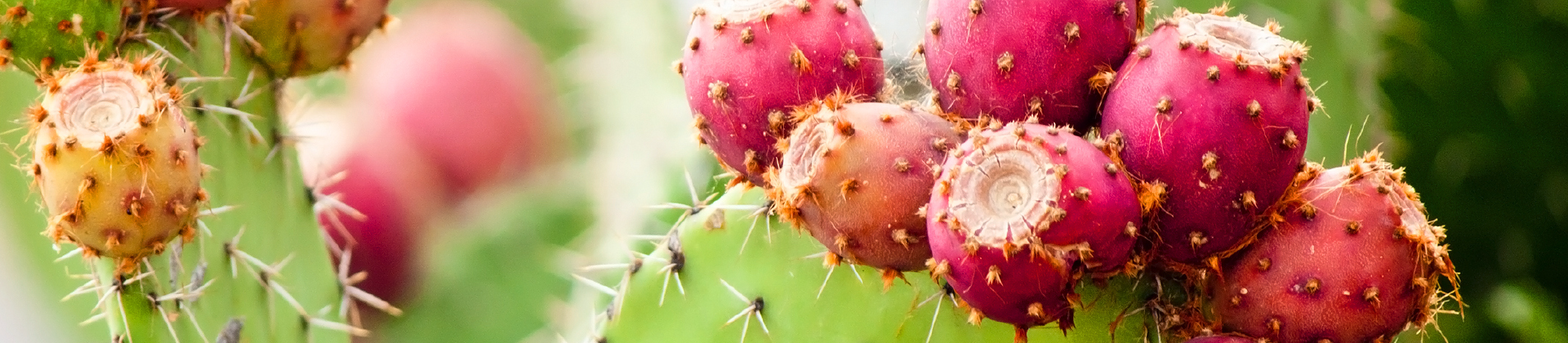
Native and introduced grasses comprise the bulk of the desert tortoise diet. Otherwise, they eat any available edible plants including spring and summer annual wildflowers, forbs and cactus fruit. Tortoises forage selectively, often sniffing or sampling various plants before consumption. Rocks and soil are also ingested, perhaps as a means of maintaining intestinal digestive bacteria and as a source of supplementary calcium or other minerals. Stones may function as gastroliths enabling more efficient digestion of plant material in the stomach.
The extent of the home range (total habitat area used to fulfill life functions) of the desert tortoise depends upon various factors such as the densities of food plants, and the age, size, sex of the tortoise. These factors and presumably the size of the home range vary throughout the species' range. There is some evidence that tortoises utilize their feces in making home ranges, dens and burrows. They may be detecting secretions from cloacal glands. It has been suggested that tortoises rarely move more than two miles from their natal nest in their entire lives.
Well-adapted physiologically and behaviorally to live in dry desert environments, desert tortoises derive almost all their water intake from the plants they eat. A large urinary bladder can store over forty percent of the tortoise's body weight in water, urea, uric acid and nitrogenous wastes. Water conservation is further aided by an ability to precipitate solid urates in the bladder, allowing water and ions to be reabsorbed while uric acid is eliminated in semi-solid form. During periods of sufficient rainfall tortoises drink copiously from temporary rainpools and eliminate solid urates. A common defensive behavior when molested or handled is to empty the bladder, leaving the tortoise at a considerable disadvantage in drier conditions. For this reason, desert tortoises should not be handled when encountered in the wild. Other avenues of water loss include respiration, defecation, and evaporation.
Activity patterns of the desert tortoise help in water conservation. It is chiefly active in the day (diurnal) or morning and evening (crepuscular), depending upon temperature and season. Summer estivation during the hottest, driest periods of the year conserves water already stored in the body. This is especially important in the hot, dry Mohave Desert summers. Burrow humidity is often as high as forty percent or more, thus reducing the rate of evaporation. Winter hibernation also aids in minimizing water loss. Burrows and dens are also used by the desert tortoise as an aid in regulating body temperature.
The flattened forelimbs of the desert tortoise an other gopher tortoises are capable tools for burrow construction. They dig with the front legs, stopping intermittently to sniff the soil. As soil is displaced, the tortoise will frequently exit the burrow and kick the excavated soil still further from the burrow entrance. The entrance is half-moon shaped and high enough for the tortoise to comfortably enter without fully extending the legs.
The location, extent and type of burrow or den varies geographically. Tortoises in the Mohave Desert in California and the northern limits of the range in Nevada and Utah seem more inclined to construct extensive burrows, up to thirty-five feet in length. Such burrows stabilize temperature and humidity providing protection form intense winter freezes. They may be used year after year by one or more tortoises. As many as twenty-five hibernating tortoises have been found in one den, although a more typical aggregation would contain no more than five individuals. Some dens in southern Utah are estimated to be 5000 years old. Burrows are typically located under rocks or bushes, preferably along sloping terrain, and along washes, either at the base or elevated from the bottom.
In the Sonoran Desert in southern Arizona and presumably south into Sonora, the desert tortoise hardly burrows. Refuges merely cover the carapace and are often modified from mammal burrows or natural refuges in rocky terrain. Sonoran desert tortoise retreats are often on rocky slopes in mountains, avoiding the deep soiled valley situations favored by Mohave desert tortoises. Pallets are shallow depressions constructed under low shrubs at various points within the tortoises' home range, providing temporary resting sites. They are especially prominent in southern desert tortoise populations where mild winters mitigate the need for extensive burrows and desert tortoises may not hibernate. Here, burrows are often dug into the base of packrat houses rather than in the gravelly soil.
Like most other burrowing animals, the desert tortoise creates a subterranean environment beneficial to other reptiles, mammals, birds and invertebrates. Animals which share tortoise burrows benefit from permanent or temporary shelters afforded by the tortoise dens and burrows, although they offer little or nothing to the tortoise.
Many behavioral attributes of the desert tortoise are well documented. When confronted by a predator, tortoises typically withdraw their head, feet, and tail, folding their front knees in front of their head, thus exposing only the shell and heavy scales of the armored forelimbs. This is an effective defense against most predators except people. If attempts are made to remove a tortoise from its burrow, it will retreat to the interior or extend the legs, wedging the carapace against the roof of the burrow. The defensive behavior of adult tortoises is usually passive while juveniles can be surprisingly pugnacious.
Social behavior consists of a series of head bobs for species and gender recognition, courtship and threat. Head bobbing normally precedes agonistic (combative) behavior between males, although females may also be aggressive. Prominent chin glands in male tortoises produce a secretion which aids in sex recognition and often evokes combative behavior. Male combat is most intensive in spring and late summer in the Sonoran Desert. During these encounters, each male stands as high as possible, making short rushes toward his adversary while attempting to use the gular horn at the front of the plastron (undershell) to overturn the other or drive him away. An overturned tortoise can usually right itself using its head and a forelimb; if not, the tortoise may overheat and die under the desert sun. The desert tortoise produces a variety of sounds (hisses, grunts, pops, whoops, huhs, echs, bips, etc.) which seem to be the most important when vocalized to an unfamiliar tortoise.
A loose male dominance hierarchy is apparently established by aggression. Dominant males court and mate with females more often than other males. Courtship involves extensive head bobbing as the male attempts to nip and bite at the edges of the female's carapace and legs while circling her. If the female is receptive, she will allow the male to mount her from behind. At this point the female will remain still as the male probes with his tail while grunting and enthusiastically stamping his hind feet. The nuptial embrace continues until the female wanders away. The mating posture is facilitated by a strong depression in the male's plastron that fits neatly onto the convex carapace of the female. The males's longer tail enables the penis to penetrate the cloaca. The neatly upright copulatory position of the male is further aided by the inward curve at the rear of the male's carapace. The mature female differs in having a flat plastron, a shorter tail, and an outward curve at the rear of the carapace which probably provides a wider space for egg laying. The gular horn of the male is longer and more curved, the claws more massive.
While sexual maturity in the wild is estimated to take twelve to twenty years, it is a factor of growth and size rather than age. Tortoises reared in captivity may mature sooner. Mating has been observed from early spring to fall with the highest frequency in late summer in the Sonoran Desert. Viable sperm retained in the cloaca of the female has resulted in fertilization a year and a half after copulation. Other turtle species have laid fertile eggs as long as four years after mating. Sperm retention is an excellent survival adaption in non-colonial animals that wander and whose numbers can decline in fluctuating climates of deserts.
Nest sites are often selected in or near dens or pallets. The female excavates the nest hole using her hind legs. She urinates before, during and after the nest hole is dug as well as after covering the eggs, possibly to deter predators by camouflaging the nest and to prevent egg desiccation. In one observation, a female fought a Gila monster (Heloderma suspectum) attempting to eat newly laid eggs suggesting that nest sites may be defended for a period of time following egg deposition. Desert tortoises normally construct nests and lay eggs in May or June. In the southern portions of the range, a second clutch may be produced in late summer. These late summer clutches may undergo extended incubation periods hatching in the fall or next spring. The normal incubation period is ninety to one hundred thirty-five days depending upon incubation temperature. The clutch size varies from two to fourteen eggs with an average of three to five although some eggs may not be fertile. The eggs are hard-shelled, moisture proof, white and nearly spherical to ellipsoid in shape. Mortality of both eggs and juveniles is extremely high due to predation and environmental conditions. Probably no more than one hatchling from every fifteen to twenty nests will reach sexual maturity in the wild resulting in very low recruitment to the population. The fifty to eighty year life span estimated for desert tortoises suggests population turnover is not only low but should be very episodic following fluctuating climates. The desert tortoise could reach a "point of no return" as more reproducing adults fall victim to humanity's expanding impact in fragile desert environments.
The desert tortoise has long been utilized by southwestern peoples. The tortoise was relished as food by the Piman, Paijute and Seri Indians. Shells were used as cooking vessels and as trade items. The Seris of the coast of the Gulf of California in Sonora used tortoise parts for medicine and shell rattles as musical instruments and toys. According to Richard Felger and Rebecca Moser, who have studied the ethnobiology of the Seris extensively, "If a woman has given birth to only female offspring, she is said to have eaten the reproductive organs of a female desert tortoise. If her offspring are all male, it is said that as a child she had been hit in the small of her back with the reproductive organ of a male desert tortoise playfully thrown at her by a girlfriend." Seri folklore features the desert tortoise, called ziix hehet cquiij meaning "thing that sits in bushes." Later, tortoises were eaten by white settlers and prospectors. Mexican traders carried them alive as a source of fresh meat and water. Tortoises are occasionally eaten in Sonora today.
The desert tortoise is protected as a Threatened species under the U.S. Endangered Species Act north and west of the Colorado River in California, Nevada, and Utah where an upper respiratory tract disease has decimated many populations. Numerous other factors have contributed to this decline including residential development, road construction, agricultural and mineral development, use of off-road vehicles, overgrazing, malicious vandalism, and collection as pets.
The status of the populations in Arizona is apparently less serious but warrants continued monitoring and research. While remote populations appear to be stable, those near urban or recreational centers have declined significantly. The desert tortoise is fully protected in Arizona and collection from the wild is strictly prohibited without a permit issued by the Arizona Game and Fish Department.
Many Arizonans are interested in having a desert tortoise for a number of reasons. This interest can be met through regulatory mechanisms and captive tortoise recycling programs like the Desert Museum's Tortoise Adoption Program (TAP). Modeled after similar programs in California, applicants are carefully screened for intent and responsibility before being assigned a tortoise, which remains the property of the State of Arizona. All tortoises placed are urban foundlings, unwanted captives, or their progeny. The purposes of the program, sanctioned by the Arizona Game and Fish Department, are to provide appropriate care and custody for tortoises already in captivity while vigorously discouraging the taking of tortoises from the wild. Thousands of tortoises are held in captivity in Arizona. It is ironic that people's attraction to the tortoise has become a significant threat to its future. Unfortunately, release of captive tortoises is considered a high risk to existing populations because of the potential to introduce disease, disrupt population structure, and mix genetic stock from different regions. Management of the captive population separately from those in the wild may actually aid conservation of wild tortoises. Under Arizona law, one tortoise per family member may be possessed if the tortoises are obtained from a captive source and properly documented.