Program Accomplishments
10/1/2011 - 9/30/2012
General Overview
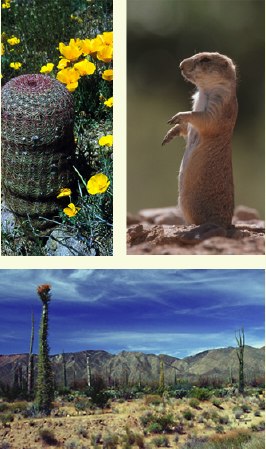
The Arizona-Sonora Desert Museum is a world-renowned zoo, natural history museum and botanical garden. Exhibits realistically re-create the natural landscape of the Sonoran Desert Region. Within the Museum grounds, visitors will see more than 300 animal species and 1,200 kinds of plants. There are almost 2 miles of paths traversing 21 acres of beautiful desert. The Museum is open for public visitation every day of the year. Since its opening in 1952, approximately 21,000,000 people from around the world have visited the Museum. Some 21,000 individuals and families currently hold memberships in the Museum. In fiscal year 2011, attendance at the Museum was 378,489 visitors. Each day, about 30 docents provide interpretations for visitors throughout the grounds on a variety of subjects ranging from fossils to vultures, from saguaros to riparian ecology. Our approximately 200 docents offer more than 20,000 on-grounds interpretations, annually, on some 40 different topics. Surveys reveal that over one-half of our visitors interact with docents during their visit to the Museum. Through our on-grounds concessionaires, the Museum has 2 gift shops and four dining areas.
Conservation Education and Science Department
Initiatives undertaken by the Conservation Education and Science Department are project-based, such that education and science staff work side-by-side to develop and deliver programs that are not only scientifically sound, but are also translated into public education and result in meaningful conservation efforts. Using this model, scientists and educators collaborate in ways that are more: cost-effective, mutually beneficial for the project and the Museum, and attractive to both funders and community partners. All of the Department's programs partner broadly across the landscape of the U.S. and Mexican science, education, and conservation community.
Major Program Areas in the Conservation Education and Science Department
-
Docent Program: Docents contributed 75,000 hours to the Museum in 2012
Docents are part of a Museum-wide volunteer program; docents differ from other volunteers in the interpretive nature of their work and in the extensive training such work requires. ASDM docents are trained volunteers who interpret the natural history of the Sonoran desert region to Museum visitors and to groups within the community. In doing so, they help the Museum fulfill its conservation education mission.
Docents are adults of all ages, walks of life, and educational backgrounds. There are currently nearly 200 docents volunteering one day per week (or more). A docent's primary responsibility is interpretation of the Museum grounds. Such interpretation consists of conducting tours for general visitors and performing interpretive programs or special activities such as theme talks, live animal interpretations, or being stationed at an exhibit.
The Museum requires a minimum two-year commitment to the Docent Program. To maintain active status, docents are required to donate a minimum of 144 hours of interpretation per year on the Museum grounds.
An extensive 15-week docent training is required and after successful completion, trainees are welcomed into the docent corps. Trainees meet at the Museum for a three-hour class, two weekday mornings each week for fifteen weeks (some classes are all day sessions). The first week consists of 4 morning orientation sessions.
The classes are taught by Museum curatorial staff and educators. The curriculum is coordinated by the Interpretive Program Manager and focuses on such areas as causes of deserts, geology of the Sonoran Desert, ecological concepts, the flora and fauna of the region, interpretive methods and Museum philosophy. Trainees are required to spend time on the Museum grounds, observing docent tours and interpretive presentations. They must receive passing scores on section quizzes, a mid-term exam, and a final exam.
Upon successful completion of the course, trainees attend a graduation ceremony and receive diplomas as they are welcomed into the Museum family.
Youth and Community Outreach Program: Total Audience Served in 2012: 45,000
- Youth Field Trips
-
The Arizona-Sonora Desert Museum is a zoo, botanic garden and natural history museum all in one! Teachers can structure their field trips using a variety of activities available for download from the Museum's website. In addition, suggested classroom activities to be used pre- and post- trip can be downloaded. These help to extend and deepen the learning from a Desert Museum visit, and are available for elementary, middle and high school students. Visiting groups can also choose from 19 different Desert Discovery Classes and Labs offered in museum classroom facilities.
Numbers Served in 2012: 28,600 - Desert Ark
-
The Desert Ark is the Museum's outreach program, bringing the resources of the Museum, including expert educators and live animals, to all parts of Southern Arizona, from schools to senior centers, and from Ajo to Safford. The Museum offers 19 different Desert Ark programs, in addition to custom programs available by request.
Numbers Served in 2012: 15,000 - Teacher Workshops/Continuing Education
-
The Arizona-Sonora Desert Museum provides teachers with opportunities to participate in classroom and outdoor workshops, including a resource fair at our Teacher Appreciation Night. These workshops provide them with tools and resources to help their students further their knowledge about Sonoran Desert natural history:
Numbers served in 2012: 300 - Earth Camp
-
Earth Camps are hands-on, minds-on field camps which focus on sustainability issues and promote youth leadership skills. Students learn about the Sonoran Desert ecosystem and current environmental issues while hiking, camping and exploring our beautiful desert. ASDM offers both a High School and Middle School version of Earth Camp. 16 teachers in our new Earth Camp for Educators program received over 80 hours of professional development credit.
Numbers Served in 2012: 56 - Museum Explorers Camp
-
Hands-on, minds-on day camps for children in grades 1-6. Museum Explorers touch and observe live animals, conduct science experiments, create cool crafts, sketch in desert journals, sample desert foods, and explore behind the scenes at the Desert Museum. These camps are offered in both the summer and winter.
Numbers Served in 2012: 100 - Junior Docent Program
-
The Desert Museum Junior Docent program is designed for Tucson area boys and girls ages 13 to 18. Junior Docents receive training on the plants, animals and geology of the Sonoran Desert Region and how to interpret (teach) it to others. Desert Museum membership, special privileges and recognition, and the opportunity to help out with Museum events are just some of the benefits Junior Docents receive in addition to being part of a world famous museum! During their two-year term as a Junior Docent, teens typically develop self-confidence, public speaking ability and a great depth of natural history knowledge.
Numbers served in 2012: 15 - Advanced Youth Interpreters
-
Advanced Youth Interpreters (AYI) are among a group of talented youth who have individually volunteered over 300 hours of their time and at least two years of service in the Arizona-Sonora Desert Museum's Junior docent Program. These AYI are skilled at interpretation and ready to provide leadership at the Museum and in the Tucson community. This program is meant to engage these youth, encourage the authentic application of their interpretation and leadership skills, and as a consequence, enrich our community beyond the Museum grounds.
Numbers served in 2012: 15 - Coati Kids Club
-
This membership program for kids offers free admission all year long, eight special events for club members, a club t-shirt and explorer's pack and a semi-annual newsletter, just for kids. The Museum recently dedicated a "Forever Young Treehouse" as the official clubhouse of the Coati Club.
Numbers served in 2012: 100 (about 30 families) - Coati Pups
-
A program for preschoolers and their parents, Coati Pups introduces some of our youngest visitors to the wonders of our desert through art, crafts, guided walks, science explorations and special encounters with live animals.
Numbers served in 2012: 80 - Desert Rats
-
Created as a bridge program between the Coati Kids Club and the Junior Docent Program, the Desert Rats spend time exploring the Museum including getting a peek at all of the behind-the-scenes areas. They learn about the Museum's operations as well as the natural history of the flora and fauna of the region. They also gain interpretive skills to help prepare them to apply to become a Junior Docent. This is a one-year program that meets about once a month.
Numbers Served in 2012: 10 - Public Classes, Trips and Tours — for Adults and Families
-
These programs are offered to the public throughout the year to create a better understanding of our Sonoran Desert through enjoyable and informative experiences, and provide opportunities to learn practical applications for working and playing in balance with our environment.
Numbers served in 2012: 400