 TICKETS
 DONATE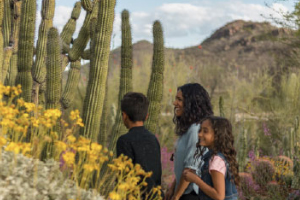


Earth Camp for Grades 9-11
July 7-16, 2008
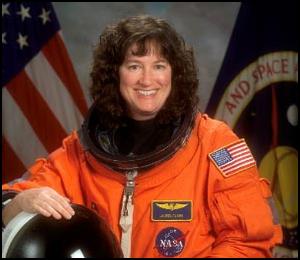
Earth Camp is a partnership between the University of Arizona College of Science and the Arizona- Sonora Desert Museum.
Conceived to honor the legacy of Columbia space shuttle astronaut Laurel Clark, the goal of Earth Camp is to educate and inspire youth to build leadership skills through experiential learning and conceptual understanding of earth processes. Earth Camp seeks to expand youth awareness of the interdependency of all living things, create a sense of wonder related to the Sonoran Desert and ecosystems worldwide, as well as open their eyes to the "awe-inspiring" universal perspective. Earth Camp High School provides hands-on ecological research experience to help youth appreciate how science can be used to help people make better choices in a rapidly changing world.
Earth Camp 2008 will challenge youth entering grades 9-11 to explore global changes in climate, water and landscapes as well as how these changes impact sustainability issues. Students will work together in small-groups exploring the ecology and climate from mountains to low deserts, from the northern to the southern portions of the Sonoran Desert and from coastal to inland regions.
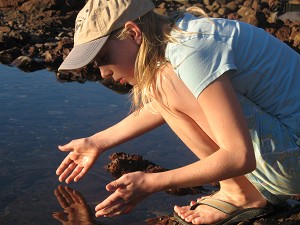
While hiking washes, combing beaches, gazing into tide pools and peering through microscopes, students will learn about the plants and animals that characterize the Sonoran Desert, comparing and contrasting Arizona and Sonora, Mexico. In all of these areas they will learn how people are using, changing and protecting these landscapes.
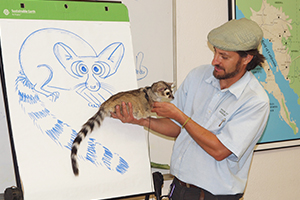
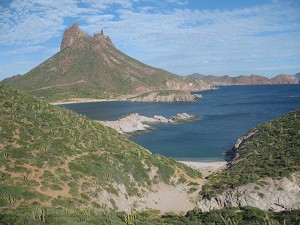
Students will be introduced to the ecology of the Sonoran Desert at the Arizona-Sonora Desert Museum where they will have the chance to interact with live animals. They will explore the several distinct ecosystems from the low desert up to 9,000 feet at the top of the Mount Lemmon sky island and consider how current and future environmental change will affect them. A trip to San Carlos, Mexico on the Gulf of California will provide an opportunity for field work on the coast and will allow students to extend their comparisons to marine ecosystems. Campers will assimulate their newly accquired knowledge and understanding of global change at the University of Arizona.
During the entire ten days, campers will record their journey in photos, drawings, observations, data and personal reflections in field journals, which will then be transferred to individual web pages. Campers will compute and evaluate their personal and collective environmental impact and use this ecological footprint to inform future choices.
Students will camp in the desert and atop a mountain, stay in air-conditioned accommodations in San Carlos, and spend a couple of nights in University of Arizona dormitories.
A Learning Celebration at the end of the camp gives the students an opportunity to share their discoveries with each other and with their families.
Participants are selected by an application process. Applications must be postmarked by March 15th, 2008; early applications accepted. Space limited to 20 youth. One credit from the University of Arizona and/or high school credit may be available to high school Earth Camp participants. For more information call Amy Orchard at 520-883-3083.
Important Forms
About the Instructors
 Julie Strom grew up in Tucson and has been combining her love of teaching and for the desert for as long as she can remember. Julie received her Bachelor of Science in Botany and Zoology from the University of Massachusetts at Amherst in 1987. She later earned her teaching certificate from the University of Arizona, and has been teaching in the Tucson area for the past 14 years. Julie is currently pursuing a Master's Degree in Education with an emphasis on Environmental Learning at the University of Arizona. Julie became a Docent at the Arizona-Sonora Desert Museum in 1989. She returned to the Museum in 2004 as an intern and in 2005 was hired as an Education Specialist to teach outreach classes, work with University students, develop curriculum and co-manage the Junior Docent program.
 Holly Hilburn is the Earth Camp collaborator from the University of Arizona. Having completed a Master's Degree in Education with an emphasis on environmental learning, she has a long-standing commitment to the environment and to experiential education. Holly is an experienced teacher that has taught in non-traditional classrooms such as the Sierra Nevada mountains, a fifteen passenger van driving around the busy border city of Nogales, Sonora, and the central plaza of a small town in Mexico. Holly learned to speak Spanish living on a dairy farm in Bolivia while she was in college pursuing her undergraduate degree in Geology and Latin American Studies. She is a native of California and enjoys sewing, cooking, hiking and running.
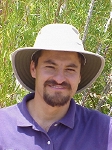 Jesús Manuel García was born and raised in Magdalena de Kino, Sonora, México. He completed a degree in Elementary Education, (Escuela Normal del Estado) in Hermosillo, Sonora, and then moved to Tucson and graduated from the University of Arizona with a Bachelor degree in Ecology and Evolutionary Biology, with a minor in cultural Anthropology. Jesús has been associated with the Arizona-Sonoran Desert Museum since 1991. Currently, he is an education specialist teaching natural history programs to the Hispanic community of the Tucson area schools as well as in the border region of the state of Sonora, Mexico. Jesús has many interests such as conservation biology, cultural ecology, languages, music, gardening, and art.
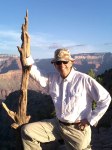 Franklin Lane is the Director of Education for the Sonoran Sea Aquarium. He has a Bachelor's degree in Oceanography from the U.S. Naval Academy and a Masters in Education Administration. Franklin is a former high school physics teacher, assistant principal and athletic director. He has also been a professional hiking guide, surveyor, baseball scout and U.S. Marine. He has lived in the Sonoran Desert for fifteen years and is married with three children ages seventeen to twenty-six.
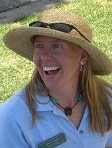 Amy Orchard has worked at ASDM since 2001. She has a Bachelor's degree in Environmental Studies from Prescott College and has 15 years experience educating youth of the desert southwest about its flora and fauna. Amy currently co-manages the teen programs at ASDM and has taught natural history to youth groups in numerous exciting locations such as Arches National Park, on raft trips down the Colorado River and in the Catalina mountains. Amy has facilitated youth programs such as a six-year course which included survival skills and overnight backpacking trips. Amy is an experienced whitewater river guide and enjoys knitting, hiking, scuba diving and hanging out with her family.